Liberty is an inherently offensive lifestyle. Living in a free society guarantees that each one of us will see our most cherished principles and beliefs questioned and in some cases mocked. That psychic discomfort is the price we pay for basic civic peace. It's worth it. It's a pragmatic principle. Defend everyone else's rights, because if you don't there is no one to defend yours. -- MaxedOutMama

I don't just want gun rights... I want individual liberty, a culture of self-reliance....I want the whole bloody thing. -- Kim du Toit

The most glaring example of the cognitive dissonance on the left is the concept that human beings are inherently good, yet at the same time cannot be trusted with any kind of weapon, unless the magic fairy dust of government authority gets sprinkled upon them.-- Moshe Ben-David

The cult of the left believes that it is engaged in a great apocalyptic battle with corporations and industrialists for the ownership of the unthinking masses. Its acolytes see themselves as the individuals who have been "liberated" to think for themselves. They make choices. You however are just a member of the unthinking masses. You are not really a person, but only respond to the agendas of your corporate overlords. If you eat too much, it's because corporations make you eat. If you kill, it's because corporations encourage you to buy guns. You are not an individual. You are a social problem. -- Sultan Knish

All politics in this country now is just dress rehearsal for civil war. -- Billy Beck

Showing posts sorted by relevance for query The Underground History of American Education. Sort by date Show all posts

Wednesday, September 12, 2018

Education, Societal Division and a Proposal

Überpost alert!  It is something I've been studying and thinking about since 1993, and writing about here for 15 years, so there will be a lot of internal links, external links, links to stuff that only exists because of the Internet Wayback Machine, etc. and a lot of stuff you've seen here before if you've been here very long. It's about a lot more than education but it all starts there.

Lets get on with it, shall we?

"All who have meditated on the art of governing mankind have been convinced that the fate of empires depends on the education of youth." - Aristotle

If you've read this blog for any extended period, you know one of my personal hobby-horses is public education. Specifically, its general failure to educate. That failure is hardly a new thing. Let me remind you:

Quote of the Day, July 13, 2012

Quote of the Day, July 14, 2009

Those are John Taylor Gatto quotes not necessary to requote in full here, thus the links. Here are a couple of other significant quotes:
The aim of public education is not to spread enlightenment at all; it is simply to reduce as many individuals as possible to the same safe level, to breed and train a standardized citizenry, to put down dissent and originality. That is its aim in the United States, whatever the pretensions of politicians, pedagogues, and other such mountebanks, and that is its aim everywhere else.

--

And what is a good citizen? Simply one who never says, does or thinks anything that is unusual. Schools are maintained in order to bring this uniformity up to the highest possible point. A school is a hopper into which children are heaved while they are still young and tender; therein they are pressed into certain standard shapes and covered from head to heels with official rubber-stamps.

Henry Louis Mencken, 1924
Even Noam Chomsky concurs:
I quoted the Trilateral Commission view of the educational system, namely that it's a system of indoctrination of the young, and I think that's correct. It's a system of indoctrination of the young. That's the way the liberal elites regarded it and they're more or less accurate. So the educational system is supposed to train people to be obedient, conformist, not think too much, do what you're told, stay passive, don't raise any crises of democracy, don't raise any questions. That's basically what the system is about.
Watch the whole clip. It's about five minutes long.

I've written about indoctrination before, but my objection has been to what indoctrination is going on, not why:
...I am ambivalent on the topic of "indoctrination." My problem is with what that indoctrination entails. (Leo) Rosten objects to the failure of the educational system to indoctrinate moral values. I'd say it still does. It just doesn't indoctrinate goodness, kindness, and decency anymore. It indoctrinates "multicuturalism," "tolerance," "sensitivity," "fairness," "socialism," and "self-esteem." It fails to instruct in history, civics, ethics, mathematics, English, or for that matter, job skills. The education system receives "young skulls full of mush" and processes them right on through, sending them into the world with what Ayn Rand described as "a junk heap of unwarranted conclusions, false generalizations, undefined contradictions, undigested slogans, unidentified wishes, doubts and fears."

The reasons for this are myriad. Diane Ravitch puts part of the blame (convincingly) on the textbook companies who are loath to put anything in a text that someone, anyone, might find offensive. I put a large part of the blame on the influx of socialist True Believers into the ranks of educators since the time of John Dewey. As far as public schools are concerned, we've abandoned the idea that education can liberate the human mind or human spirit. Schools are now warehouses, run by administrators terrified of lawsuits and too many teachers who are literally tyrannized by their charges and their parents. Indoctrination still goes on, though. Read this lovely little op-ed by Mark Bradley, a history teacher from Sacramento. I bet his classes are popular!

It would seem that if you want some good indoctrination, your only choices are homeschooling or private - often ecumenical - schools.

Indoctrination of children is not necessarily a bad thing, but somewhere along the line we stopped paying attention to what was and what wasn't getting poured into their heads, and it started long before 1975.
In 2008 I wrote another überpost, The George Orwell Daycare Center, specifically illustrating the kind of indoctrination I'm objecting to, followed by an observation by historian, profound thinker and university professor Victor Davis Hanson. I believe that it is still possible to get a decent education out of many, possibly most school systems in this country - if you want one.  This is due to those teachers who really do know their subjects and how to teach them, and students willing to do the work necessary to learn them. I think both still exist, however I graduated High School in 1980 so this may no longer be as true as it once was. It does appear that the ratio of such teachers and students to the general population is getting continually smaller. That question is "Why?"
Our once unchallenged preeminence in commerce, industry, science, and technological innovation is being overtaken by competitors throughout the world. This report is concerned with only one of the many causes and dimensions of the problem, but it is the one that undergirds American prosperity, security, and civility. We report to the American people that while we can take justifiable pride in what our schools and colleges have historically accomplished and contributed to the United States and the well-being of its people, the educational foundations of our society are presently being eroded by a rising tide of mediocrity that threatens our very future as a Nation and a people. What was unimaginable a generation ago has begun to occur--others are matching and surpassing our educational attainments.

If an unfriendly foreign power had attempted to impose on America the mediocre educational performance that exists today, we might well have viewed it as an act of war.
That last one is from the introduction to the 1983 report of the National Commission on Excellence in Education entitled A Nation at Risk: the Imperative for Educational Reform.

It was an act of war. Guerilla war. But the battleground had been carefully prepared, like the Maginot Line, for an entirely different war.
In the first decades of the twentieth century, a small group of soon-to-be-famous academics, symbolically led by John Dewey and Edward Thorndike of Columbia Teachers College, Ellwood P. Cubberley of Stanford, G. Stanley Hall of Clark, and an ambitious handful of others, energized and financed by major corporate and financial allies like Morgan, Astor, Whitney, Carnegie, and Rockefeller, decided to bend government schooling to the service of business and the political state—as it had been done a century before in Prussia.

Cubberley delicately voiced what was happening this way: "The nature of the national need must determine the character of the education provided." National need, of course, depends upon point of view. The NEA in 1930 sharpened our understanding by specifying in a resolution of its Department of Superintendence that what school served was an "effective use of capital" through which our "unprecedented wealth-producing power has been gained." When you look beyond the rhetoric of Left and Right, pronouncements like this mark the degree to which the organs of schooling had been transplanted into the corporate body of the new economy.

It’s important to keep in mind that no harm was meant by any designers or managers of this great project. It was only the law of nature as they perceived it, working progressively as capitalism itself did for the ultimate good of all. The real force behind school effort came from true believers of many persuasions, linked together mainly by their belief that family and church were retrograde institutions standing in the way of progress. Far beyond the myriad practical details and economic considerations there existed a kind of grail-quest, an idea capable of catching the imagination of dreamers and firing the blood of zealots.

-- John Taylor Gatto, The Underground History of American Education
...between 1967 and 1974, teacher training in the United States was covertly revamped through coordinated efforts of a small number of private foundations, select universities, global corporations, think tanks, and government agencies, all coordinated through the U.S. Office of Education and through key state education departments like those in California, Texas, Michigan, Pennsylvania, and New York.

Important milestones of the transformation were: 1) an extensive government exercise in futurology called Designing Education for the Future, 2) the Behavioral Science Teacher Education Project, and 3) Benjamin Bloom's multivolume Taxonomy of Educational Objectives, an enormous manual of over a thousand pages which, in time, impacted every school in America. While other documents exist, these three are appropriate touchstones of the whole, serving to make clear the nature of the project underway.

Take them one by one and savor each. Designing Education, produced by the Education Department, redefined the term "education" after the Prussian fashion as "a means to achieve important economic and social goals of a national character." State education agencies would henceforth act as on-site federal enforcers, ensuring the compliance of local schools with central directives. Each state education department was assigned the task of becoming "an agent of change" and advised to "lose its independent identity as well as its authority," in order to "form a partnership with the federal government."

The second document, the gigantic Behavioral Science Teacher Education Project, outlined teaching reforms to be forced on the country after 1967. If you ever want to hunt this thing down, it bears the U.S. Office of Education Contract Number OEC-0-9-320424-4042 (B10). The document sets out clearly the intentions of its creators — nothing less than "impersonal manipulation" through schooling of a future America in which "few will be able to maintain control over their opinions," an America in which "each individual receives at birth a multi-purpose identification number" which enables employers and other controllers to keep track of underlings and to expose them to direct or subliminal influence when necessary. Readers learned that "chemical experimentation" on minors would be normal procedure in this post-1967 world, a pointed foreshadowing of the massive Ritalin interventions which now accompany the practice of forced schooling.

The Behavioral Science Teacher Education Project identified the future as one "in which a small elite" will control all important matters, one where participatory democracy will largely disappear. Children are made to see, through school experiences, that their classmates are so cruel and irresponsible, so inadequate to the task of self-discipline, and so ignorant they need to be controlled and regulated for society's good. Under such a logical regime, school terror can only be regarded as good advertising. It is sobering to think of mass schooling as a vast demonstration project of human inadequacy, but that is at least one of its functions.
That was also Gatto.

Our education system, as Gatto has noted, is largely based on the Prussian system established by the great industrialists of their era in order to produce a two-tiered output - the workers and the owners and managers. However, it was rapidly suborned instead to destroy Western culture:
Translated into practical terms and updated from its early-20th-century Italian cultural setting, (Antonio) Gramsci's thesis is understood by the modern Left to mean:
Socialist revolution will never happen in a nation if its culture continually reaffirms and enshrines middle-class capitalist values. Thus, in order to pave the way for the arrival of a communist state, radicals must first insinuate themselves into and/or influence the media and educational system, and from these positions of influence change public attitudes about the status quo. To achieve political hegemony, you must first achieve cultural hegemony.
This was a significant change from Marx's and Lenin's original ideas about communist revolution, which basically involved simply seizing power, public opinion be damned, and afterward propagandizing the masses to accept the new order. Gramsci realized that Marx had it reversed, and that the propaganda and indoctrination must happen first, in order to make the populace open to the idea of revolution; otherwise, rendered complacent by middle-class values and comforts, the populace would never consent to the upheaval of a revolution.

The media and public schools were correctly identified by Gramsci as the most influential cultural institutions, and it was therefore those that the left realized must be targeted.

It is this sophisticated Gramscian plan, and not the more brutish Marxist idea of simply seizing power by force, which has guided leftist thought in America since WWII. And it is why the media and education have, over time, been slowly turned into engines of leftist propaganda. Gramscianism matured into "critical pedagogy" which is the real-world application of his educational theories, and countless left-leaning young adults have for decades been nudged toward careers in education and the media. Some time ago, we crossed a threshold in which the Gramscian infiltrators no longer had to ply their trade surreptitiously, but became the majority in the media and in education, and after that point the process accelerated rapidly as they took over both fields and turned them into ideological weapons.
Sugatra Mitra, Indian solid state physicist and now Professor of Educational Technology at the School of Education, Communication and Language Sciences at Newcastle University, England, was among the forefront of people who had to learn how to write software, and ended up doing more teaching of that than physics. This piqued his interest in primary education. Though his interest was specific to the British system, he came to a similar conclusion:
I tried to look at where did the the kind of learning we do in schools, where did it come from? And you know you can look far back into the past, but if you look at present-day schooling the way it is, it's quite easy to figure out where it came from. It came from about 300 years ago, and it came from the last and the biggest empire on the planet. Imagine trying to run the entire planet without computers, without telephones, with data handwritten on slips of paper and traveling by ships. But the Victorians actually did it. What they did was amazing. They created a global computer made up of people. It's still with us today, it's called the "bureaucratic administrative machine."

In order to have that machine running, you need lots and lots of people. They made another machine to produce those people - the school. The schools would produce the people who would then become parts of the bureaucratic administrative machine. They must be identical to each other. They must know three things: they must have good handwriting because the data is handwritten, they must be able to read, and they must be able to do multiplication, division, addition and subtraction in their head. They must be so identical that you could pick one up from New Zealand and ship them to Canada and he would be instantly functional.

The Victorians were great engineers. They engineered a system that was so robust that it is still with us today, continuously producing identical people for a machine that no longer exists.
I will come back to this later when I delve deeper into the education portion of this post.

So the purpose of "public education" isn't so much educating, it's building dependable uniform cogs for a machine run by elites. As I have noted in the past, despite the inspirational rhetoric of Jefferson in the Declaration of Independence and President Lincoln in the Gettysburg Address, the purpose of governments has always been, until the American Revolution, to protect and expand the power and privilege of the powerful and privileged, not the protection of the individual rights of the cogs, not to be "of the people, by the people, for the people." Referring back to that first Gatto link, you'll note that our Founders were, as they pretty much had to be, self-taught. That has changed since the late 18th century, at first slowly, but exponentially.

Angelo Codevilla, Professor Emeritus of International Relations at Boston University, calls this "elite" our Ruling Class.
Our ruling class's agenda is power for itself. While it stakes its claim through intellectual-moral pretense, it holds power by one of the oldest and most prosaic of means: patronage and promises thereof. Like left-wing parties always and everywhere, it is a "machine," that is, based on providing tangible rewards to its members. Such parties often provide rank-and-file activists with modest livelihoods and enhance mightily the upper levels' wealth. Because this is so, whatever else such parties might accomplish, they must feed the machine by transferring money or jobs or privileges -- civic as well as economic -- to the party's clients, directly or indirectly. This, incidentally, is close to Aristotle's view of democracy. Hence our ruling class's standard approach to any and all matters, its solution to any and all problems, is to increase the power of the government -- meaning of those who run it, meaning themselves, to profit those who pay with political support for privileged jobs, contracts, etc. Hence more power for the ruling class has been our ruling class's solution not just for economic downturns and social ills but also for hurricanes and tornadoes, global cooling and global warming. A priori, one might wonder whether enriching and empowering individuals of a certain kind can make Americans kinder and gentler, much less control the weather. But there can be no doubt that such power and money makes Americans ever more dependent on those who wield it.

Laws and regulations nowadays are longer than ever because length is needed to specify how people will be treated unequally.
--
(The party) is composed of two tiers. The lower tier produces many outspoken members who make their demands known to the upper tier. The lower tier is derived from the inner-city population that serves as the base of the party. The lower tier's members are generally educated in public school systems and if they aspire to advanced training, they are educated in facilities provided by the state. This wing constitutes the majority of (the party's) membership, but contributes little or nothing to party theory or platform. It votes the party line and is rewarded with cash payments, subsidized housing, subsidized education, and occasional preferential employment in government positions. The lower tier provides only a handful of clearly token individuals allowed to serve in high offices.

The upper tier, which includes most of the party's management, virtually all the appointed and elected government officials, and all of the party's decision-makers, is drawn exclusively from suburban areas where wealth is a fundamental criterion for admittance as a resident. These party members are generally educated at private schools and attend private colleges. They are not affected by food-rationing schemes, income caps or taxation laws, as the legislation drafted and passed by members of their social group inevitably contains loopholes that effectively shelter their income and render them immune from unpleasant statues that restrict the lives of lower-tier party members and all nonparty citizens.

(The party) leadership recognizes that in return for supporting a seemingly populist agenda, they can obtain all the votes they require to remain in power. Even the most cursory analysis of their actions and attitudes, however, indicates that they are not populists but, in fact, are strong antipopulists who actively despise their voting base. This....is proven by their efforts to reduce public educational systems to a level most grade-school children (in other countries) have surpassed, with the excuse that this curriculum is all that the students can handle. They have made the inner-city population base totally dependent on the government, which they control. -- John Ringo from the novel The Road to Damascus
I'm by no means a fan of Pat Buchanan, but I think he was absolutely correct when he said:
Our two parties have become nothing but two wings of the same bird of prey.
So our system of Public Education has been largely turned into not only a system to crank out identical cogs, it also serves as a place for political indoctrination, and a place to ensure that a love of learning is beaten out of those cogs.

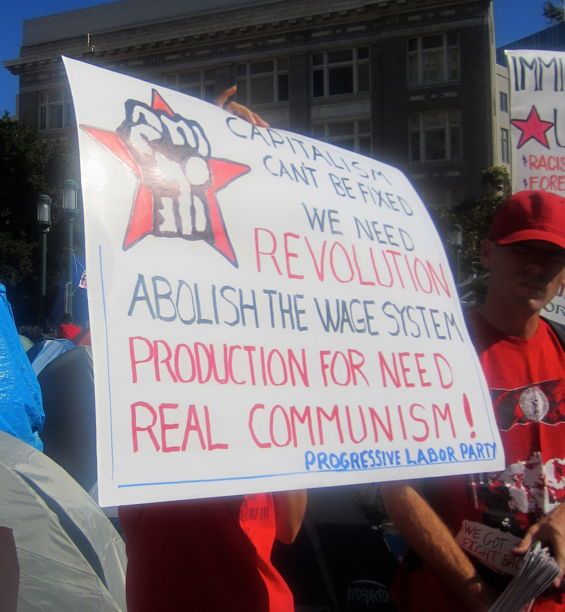
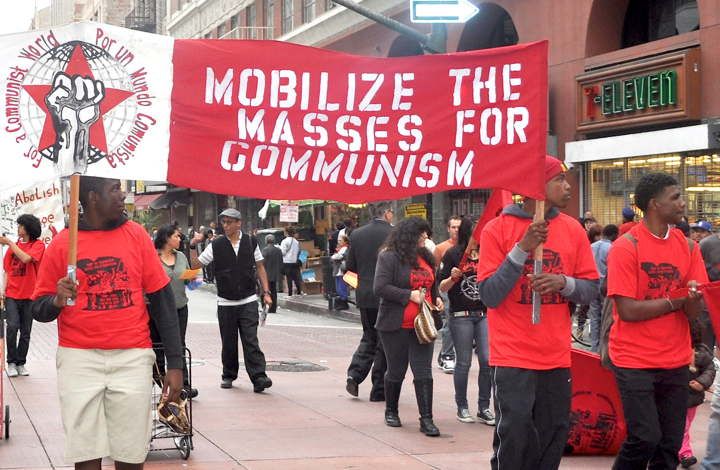
The political Left, once referred to as "the loyal opposition," has been suborned by Marxists in order to pursue their holy quest for the Utopia promised by Marx. Marxism promised the birth of the "New Soviet Man" as a spontaneous outcome of a Communist society, but that has never occurred. Of course, the counter argument is that none of the societies that call themselves Communist actually have been. "True communism has never been tried!" But the supporters of Marxist philosophy eventually concluded that Gramsci was right, those men are required in order to achieve "True Communism" instead of them spontaneously springing up after "the Revolution." The New Soviet Man had to be made, and the public education system has been the primary tool, along with the entertainment and information media, to pursue this goal.

To some tiny extent it has been successful.
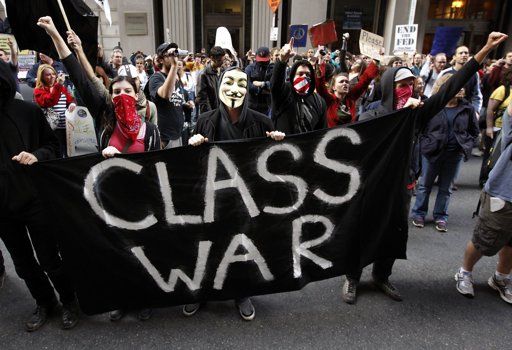


In other significant ways it has spectacularly failed.

Thomas Sowell, economist and philosopher and the best thinker in my opinion of the last 70 years, wrote in what I consider to be his magnum opus A Conflict of Visions: Ideological Origins of Political Struggles that human beings philosophically break down, crudely but sufficiently descriptively, into two fundamentally opposed worldviews that they are effectively born with, not that they reach through reason:
 Sowell calls one worldview the "constrained vision." It sees human nature as flawed or fallen, seeking to make the best of the possibilities that exist within that constraint. The competing worldview, which Sowell terms the "unconstrained vision," instead sees human nature as capable of continual improvement.

You can trace the constrained vision back to Aristotle; the unconstrained vision to Plato. But the neatest illustration of the two visions occurred during the great upheavals of the 18th century, the American and French revolutions.

The American Revolution embodied the constrained vision. "In the United States," Sowell says, "it was assumed from the outset that what you needed to do above all was minimize [the damage that could be done by] the flaws in human nature." The founders did so by composing a constitution of checks and balances. More than two centuries later, their work remains in place.

The French Revolution, by contrast, embodied the unconstrained vision. "In France," Sowell says, "the idea was that if you put the right people in charge--if you had a political Messiah--then problems would just go away." The result? The Terror, Napoleon and so many decades of instability that France finally sorted itself out only when Charles de Gaulle declared the Fifth Republic.
I would argue that France hasn't exactly sorted itself out, but it is for the moment stable enough. (Editor's note:  This essay was written before the French Yellow Vest Movement.  I may have been overly optimistic.) My point here is that those born with the "unconstrained" worldview are the ones that can be, and often enthusiastically are, receptive to the Utopian promise of Marxism.  The problem is that those born with the "constrained" worldview aren't, and they don't understand that. As a result, as Charles Krauthammer put it:
To understand the workings of American politics, you have to understand this fundamental law: Conservatives think liberals are stupid. Liberals think conservatives are evil.
So President Trump got elected to the shock of almost everyone, everywhere. No one in the political establishment, entertainment or information media could understand it.  He was, despite his wealth and education, not part of the Ruling Class, but he was President and a danger to the status quo so everyone who is part or imagines themselves part or wants to be part of the Ruling Class has agreed that he won illegitimately and must be gotten rid of regardless the cost. All those people who voted for him? Moronic knuckle-draggers, Christian fanatics clinging to their faith, evil gun owners clinging to their pseudo-penises, evil greedy capitalists clinging to their ill-gotten gains, white supremacists longing to bring back slavery, etc, etc, etc. In short, the non-human enemy that cannot be reached so it must be wiped out.  You know, like Hitler and the Nazis. 

The irony, it burns!

The American Left is most strongly concentrated in urban and suburban areas. As previously noted, they control the information and entertainment media and the entire education system from Kindergarten to post-graduate. They therefore think that almost everyone thinks like they do. They swim in waters that they don't ever think about. But the people who elected Trump exist in large quantities nationwide. The Left doesn't consider that number. It's their blind spot. These people live in "flyover country."

When Trump appointed Betsy DeVos as Secretary of Education in 2017, the Left came further unhinged. DeVos, we were told, was unqualified, unprepared, "fundamentally incompetent," a zealot, and - to the Teacher's unions - apparently Gozer the Gozerian because she is enthusiastically in favor of education vouchers and school choice. Something the teachers unions vociferously oppose. You'll notice that our "Ruling Class" already practices "school choice." Their offspring attend private schools.
It is only from a special point of view that 'education' is a failure. As to its own purposes, it is an unqualified success. One of its purposes is to serve as a massive tax-supported jobs program for legions of not especially able or talented people. As social programs go, it’s a good one. The pay isn’t high, but the risk is low, the standards are lenient, entry is easy, and job security is pretty good...in fact, the system is perfect, except for one little detail. We must find a way to get the children out of it. -- Richard Mitchell, The Underground Grammarian
School choice is not enough. We need to nuke the whole thing from orbit, and make the rubble bounce.

Sugatra Mitra, as previously noted, was among the forefront of people who had to learn how to write software, and ended up doing more teaching of that skill than physics. When the generic PC hit the market, his colleagues were astounded to find that their young children could learn to operate these complex, expensive machine without instruction. He decided to investigate this phenomenon:
I used to teach people how to write computer programs in New Delhi, 14 years ago (1999) , and right next to where I worked there was a slum. I used to think how on earth are those kids ever going to learn to write computer programs? Or should they not? At the same time we had lots of parents, rich people who had computers, and who used to tell me "You know, my son, I think he's gifted, because he does wonderful things with computers. Oh and my daughter - surely she is extra intelligent." and so on. So I suddenly figured that how come all the rich people are having these extraordinarily gifted children? What did the poor do wrong?

I made a hole in the boundary wall of the slum next to my office, and stuck a computer inside just to see what would happen if I gave a computer to children who never would have one, didn't know any English, didn't know what the Internet was. The children came running in. It was three feet off the ground, and they said "What is this?" And I said "Yeah, it's, I don't know." They said "Why did you put it there?" I said "Just like that." And they said "Can we touch it?" And I said "If you wish to." And I went away.

About eight hours later, we found them browsing, and teaching each other how to browse. So I said "That's impossible, because- You know how is it possible? They don't know anything." My colleagues said "no it's a simple solution. One of your students must have been passing by and showed them how to use the mouse." So I said "Yeah, that's possible." So I repeated the experiment. I went 300 miles out of Delhi into a really remote village where the chances of a passing software development engineer was very little. I repeated the experiment there. There was no place to stay, so I stuck my computer in, I went away. I came back after a couple of months, found kids playing games on it. When they saw me they said "We want a faster processor and a better mouse." So I said "How on Earth do you know all this?" And they said something very interesting to me. In an irritated voice they said "You've given us a machine that works only in English, so we had to teach ourselves English in order to use it." That's the first time as a teacher I've heard the words "teach ourselves" said so casually.
Please watch the entire 22 minute video. It's important for your understanding of the rest of this essay. If you've not seen it before, it'll knock your socks off. If you're unfamiliar with the man, watch several more of his presentations. But Self Organized Learning Environments and the School in the Cloud answering "big questions" are also not enough. Human beings need to be able to do simple math in their heads, to at least understand algebra, to read with comprehension and for enjoyment, to understand history, both Western and worldwide, to understand how different governments work (or don't), and much more. In addition they need to be able to apply their knowledge to reach logical rather than emotional hypotheses and test them. They need to learn skills that have been, as Mike Rowe observes, abandoned in the pursuit of mostly useless, incredibly expensive college degrees with the specious promise that a piece of paper guarantees a well-paying career, thus leaving society with a disdain for jobs that require physical labor as somehow inferior and degrading. And they need to be taught a work ethic. I like Mike's take on it.

As R.A. Heinlein put it:
A human being should be able to change a diaper, plan an invasion, butcher a hog, conn a ship, design a building, write a sonnet, balance accounts, build a wall, set a bone, comfort the dying, take orders, give orders, cooperate, act alone, solve equations, analyze a new problem, pitch manure, program a computer, cook a tasty meal, fight efficiently, die gallantly. Specialization is for insects.
While there are autodidacts (I'm one when it comes to American history, education and Constitutional law), I don't think many people are. Those people who aren't need some direction, some pressure to learn. Generally it's pursuit of better employment opportunities, but those are adults. We're talking here about primary education. Again the Internet has become the place to go for everything from mathematics to chemistry to ancient history, to just about anything you can imagine, but someone has to provide that content and point kids at it with interest in learning it.

As far as content creation is concerned, there is multiple-degreed former hedge-fund manager and now The Most Influential Person in Education Technology, Salman Kahn, who in 2004 was tutoring his niece in mathematics long-distance using YouTube, Yahoo Doodle, a $900 desktop from Best Buy with a $200 microphone, and a closet as an office. Sound familiar?

Kahn established his non-profit Kahn Academy in 2008, beginning with a mathematics curricula, but with outside funding he's been able to hire staff and expand to many, many other subjects. His major concern, however, is mastery of the subject. That requires keeping track of each student's progress, and not allowing them to move on until they demonstrate that mastery:
I grew up with plenty of smart people. They would beat me at chess, they could solve brain teasers before I could, but then they would struggle in algebra. These were incredibly smart people who simply did not have the foundation in math that I had. I saw the same thing with my cousin, Nadia. She had actually gotten “A”s and “B”s in every math class. Despite that, she had some serious gaps in her knowledge that became more significant as the content became more difficult.
These gaps are due to the Prussian system - all students arrive in the classroom at the same time, are lectured by a teacher who has little to no time for individual attention but must finish the lecture before the next bell rings and then gives homework to the students to be turned in the next day. As he has said many times, would you construct a building this way? His example is that a contractor is hired to build that building, with a rigid time schedule. The contractor has X number of days to pour the foundation, regardless of weather or anything else. When the inspector shows up, he says "Well the concrete isn't quite dry here, and there's a crack there. I'd give it an 80%." Well, 80% is a "B" and that's good enough, right? So the contractor proceeds. But when they get to the 4th floor, the entire structure collapses. Who's at fault?

The education system.

With the Kahn Academy the lectures are viewed at home where you can back them up or simply repeat them until you've got the idea. Only then are you given problems to work, which can be done in the classroom in collaborative effort with five or six other students helping explain anything the struggling student still doesn't quite grasp, just as Dr. Mitra's SOLEs are set up. Software keeps track of the student's performance by providing those questions to solve, and once the student gives a sufficient number of correct answers in a row it determines that the student has shown mastery of the idea and allows moving ahead to the next concept. Each child learns at a different pace, with some progressing rapidly and others needing more time. The Kahn Academy model is the very definition of "No child left behind." The critical thing is, short of a mental disability your kid isn't necessarily more brilliant than other kids but they're all a lot brighter than we give them credit for. It's just that our "education" system forces them to not learn.

Back when I started this post literally years ago Kahn was working with a public school and concentrating on mathematics with this reverse system. I found an article about it which I can't find now, but I do remember that the class he was working with was something like sixth-graders. One student really grasped math. She had advanced to Calculus in a very short period - a class I had to work hard to get into my Senior year of High School in the Prussian system. There were nine of us in that class out of about 200 Seniors. She was maybe 12 years old. But what struck me was a comment by one of her teachers: "How do we slow them down?"

We shouldn't, but that "teacher" should be fired. I refer you back to that quote from the Underground Grammarian.

Kids learn, as Dr. Mitra has found, when they are intellectually challenged.  They learn at different rates, as Salman Khan has exhaustively documented. And they generally learn best when allowed to collaborate in small groups, receive enthusiastic reinforcement from adults, and are otherwise left alone to teach themselves.  No wonder the teachers unions are afraid. They're pretty much not needed, and are instead an anchor slowing if not preventing not "education" but learning. The money thrown at "education" has no effect, but the education establishment constantly blames a lack of sufficient funding as the root cause of the failure of the education system, so more and more money gets poured down that particular rat-hole.


And where does that money go? Not into infrastructure, not into the classroom, certainly not into the pockets of teachers, no matter how good or bad they are, but into the pockets of an ever-expanding army of bureaucrats that "administrate" or monitor students for things like political correctness and diversity and tolerance. Like all government programs, failure means "throw more money at it."

In addition children need to be challenged and allowed to work with both their brains and their hands to learn useful skills.  That opportunity could come from access to "Maker Labs" now springing up, albeit slowly, around the country. Hopefully the growth of these learning centers will also be exponential. The problem here though is that such labs are expensive to establish, to stock and to maintain.  That money has to come from somewhere, and the Ruling Class has no incentive to provide that funding, given that it does not produce the dependable, uniform cogs they depend on.

So we have the opportunity to switch to a system that allows the maximum possible development of every individual, rather than producing those uniform, unthinking cogs our current system relies on, but who wants that? Instead the Ruling Class wants to perpetuate this forever:


Saturday, May 14, 2016

The Last Überpost

This blog is now thirteen years old. I started TSM on Wednesday, May 14, 2003. I missed the blogiversary last year, and the year before that I put the blog in semi-retirement.

In preparation for this post, I went back and read some of those first pieces I wrote just to see what I had to say back then.

Nothing's changed much, really.

In one early post I wrote:
I am who I am, I think, primarily because of reading. I feel pity for people who don't or won't or can't read for pleasure. Short of a bodice-ripper, I don't think there's a book out there that can't teach you something. (Oh, wait. Battlefield Earth...No, that taught me never to read L. Ron Hubbard again.) My primary influence was Science Fiction. At about 12, I discovered The Science Fiction Hall of Fame, Vol. I, and I was never the same kid again. I went for SF, and I found Robert Anson Heinlein.

Exposing a pre-pubescent to R.A. Heinlein is a dangerous thing. Especially when you set him up with things like Have Spacesuit, Will Travel, and The Menace From Earth, and then you hit him between the eyes with Starship Troopers and The Moon is a Harsh Mistress. And then follow those with Stranger in a Strange Land and Time Enough for Love. Anything that man wrote, I read. Even his crap was better than most people's best work.

But I also read Asimov, Clarke, Poul Anderson, Theodore Sturgeon, Robert Silverberg, James Blish, Jerry Pournelle, Larry Niven, Ben Bova, Alan Dean Foster, Piers Anthony... Many more. It's called "speculative fiction" for a reason. It awoke, or at least encouraged, an interest in how things work - from cars to guns to computers to governments. But Heinlein's responsible for my politics. I found Henry Louis Mencken and P.J. O'Rourke much later. By then the foundation had set.

I'm not a Libertarian, though. Nor am I a Republican or a Democrat (though that's what my voter registration says - I like screwing with their primaries.) I'm sure as hell not a Green. I don't "affiliate." I figure that anyone willing to run for elective office should be immediately disqualified. At least, anyone willing to run for national office. I've forgotten who said it, but someone did: "Anyone who rises to the level of national politics is either a cutthroat or a useful idiot." Or both. The ones that are both are the really dangerous ones.

My politics and my personal philosophy are also based in the works of two other writers: John D. MacDonald, and Robert B. Parker. Their characters of Travis McGee and Spenser, which I read through my adolescence, resonated with my personal sense of rightness and honor, socially responsible independence: in short - morality.
Note that "school" was not mentioned in that excerpt. In an earlier post I pointed to an LA Dogtrainer Times piece (link now broken) about how a school valedictorian couldn't write a research paper with a bibliography, so the "Collapsing Schools" theme dates back to the beginnings of the blog.

In an even earlier piece I said:
I am strongly interested in the rights of individuals, in particular the restrictions upon our government to respect those rights.

As such, I'm not much of a fan of the government we have. In fact, I used to use this signature line:

The Constitution may not be the finest work ever set to paper,
but it beats whatever the government's using these days.

So it comes as no surprise that I'm not real enamored with the Republicans, and I find the Democrats abhorrent. Of course, I think the Greens are flakes, and the Libertarians tend to be flakes of a different shape.
My opinion of the Republican party has declined precipitously over the last thirteen years.  As has my opinion of the Democrat party.

And here we are.

In October of 2003 I wrote Not with a Bang, but a Whimper? decrying other bloggers abandoning the ideological field. Toren Smith of The Safety Valve was quoted:
After thinking it over for a while, I think The Safety Valve has run its course. Frankly, I'm tired of getting all bent out of shape about the stupidities of the world, which seem to be getting worse and worse as time goes by. The last few months it seems every day brings worse news about the corruption of science, the destruction of society by PC-think, the complete and utter end of rational political discourse, and the hydra-like expansion of government powers. International politics has gone insane. California is heading into the socialist shit pit, and most of the US seems poised to follow sooner or later. I may escape temporarily to someplace like Texas, but sooner or later I'll probably have to head for Belize or the Caymans.
--

To hell with rubbing my face in all the downer crap that's out there. Yes, I know--even if you don't go looking for politics, politics will come looking for you. But I'm going to try crossing the street, at least for the time being. And if necessary I'll shoot the bastard with my carry piece. And in the meantime I'll let my friends like Kim and James and the rest of the gang off to the right in my blog links "gaze into the abyss."
They're clearly tougher than I am.
It took me eleven years, but I got there, too.  I just didn't (completely) quit.

I have concluded that the problem isn't the government, though.  Quoting Pogo, "We have met the enemy and he is us."  THAT I blame on the government.

Packing thirteen years of blogging into a few paragraphs (using words that mostly aren't mine, naturally - I'm nothing if not consistent) I'd like to state my case one more time for the record.

Educator John Taylor Gatto studied the history of American public education after he got out of teaching in the the New York City school system.  In his book The Underground History of American Education he noted:
At the start of WWII millions of men showed up at registration offices to take low-level academic tests before being inducted. The years of maximum mobilization were 1942 to 1944; the fighting force had been mostly schooled in the 1930s, both those inducted and those turned away. Of the 18 million men were tested, 17,280,000 of them were judged to have the minimum competence in reading required to be a soldier, a 96 percent literacy rate. Although this was a 2 percent fall-off from the 98 percent rate among voluntary military applicants ten years earlier, the dip was so small it didn’t worry anybody.

WWII was over in 1945. Six years later another war began in Korea. Several million men were tested for military service but this time 600,000 were rejected. Literacy in the draft pool had dropped to 81 percent, even though all that was needed to classify a soldier as literate was fourth-grade reading proficiency. In the few short years from the beginning of WWII to Korea, a terrifying problem of adult illiteracy had appeared. The Korean War group received most of its schooling in the 1940s, and it had more years in school with more professionally trained personnel and more scientifically selected textbooks than the WWII men, yet it could not read, write, count, speak, or think as well as the earlier, less-schooled contingent.

A third American war began in the mid-1960s. By its end in 1973 the number of men found noninductible by reason of inability to read safety instructions, interpret road signs, decipher orders, and so on—in other words, the number found illiterate—had reached 27 percent of the total pool. Vietnam-era young men had been schooled in the 1950s and the 1960s—much better schooled than either of the two earlier groups—but the 4 percent illiteracy of 1941 which had transmuted into the 19 percent illiteracy of 1952 had now had grown into the 27 percent illiteracy of 1970. Not only had the fraction of competent readers dropped to 73 percent but a substantial chunk of even those were only barely adequate; they could not keep abreast of developments by reading a newspaper, they could not read for pleasure, they could not sustain a thought or an argument, they could not write well enough to manage their own affairs without assistance.

Consider how much more compelling this steady progression of intellectual blindness is when we track it through army admissions tests rather than college admissions scores and standardized reading tests, which inflate apparent proficiency by frequently changing the way the tests are scored.

--

Back in 1952 the Army quietly began hiring hundreds of psychologists to find out how 600,000 high school graduates had successfully faked illiteracy. Regna Wood sums up the episode this way:
After the psychologists told the officers that the graduates weren’t faking, Defense Department administrators knew that something terrible had happened in grade school reading instruction. And they knew it had started in the thirties. Why they remained silent, no one knows. The switch back to reading instruction that worked for everyone should have been made then. But it wasn’t.
In 1882, fifth graders read these authors in their Appleton School Reader: William Shakespeare, Henry Thoreau, George Washington, Sir Walter Scott, Mark Twain, Benjamin Franklin, Oliver Wendell Holmes, John Bunyan, Daniel Webster, Samuel Johnson, Lewis Carroll, Thomas Jefferson, Ralph Waldo Emerson, and others like them. In 1995, a student teacher of fifth graders in Minneapolis wrote to the local newspaper, "I was told children are not to be expected to spell the following words correctly: back, big, call, came, can, day, did, dog, down, get, good, have, he, home, if, in, is, it, like, little, man, morning, mother, my, night, off, out, over, people, play, ran, said, saw, she, some, soon, their, them, there, time, two, too, up, us, very, water, we, went, where, when, will, would, etc. Is this nuts?"
Yes, it is.  And no one did anything to correct it.  What has the result been?  A Daily Mail article Thursday covers the publishing of a vanity-press book ostensibly written by a Democrat Congressman. Here's the part I find pertinent:
'Voters claim they want substance and detailed position papers, but what they really crave are cutesy cat videos, celebrity gossip, top 10 lists, reality TV shows, tabloid tripe, and the next f***ing Twitter message,' the congressman gripes in the book.

'I worry about our country's future when critical issues take a backseat to the inane utterings of illiterate athletes and celebrity twits.'
The product of 100+ years of public schooling, with the accelerating aid of the Department of Education (established in 1979 under the Carter administration) has brought us to this point where significantly less than half the population of the country understands the system of government or economics they live under.  Or is even interested in understanding them.  I've quoted from the 1983 report A Nation at Risk before, too.  It's author had this to say in the preface:
Our Nation is at risk. Our once unchallenged preeminence in commerce, industry, science, and technological innovation is being overtaken by competitors throughout the world. This report is concerned with only one of the many causes and dimensions of the problem, but it is the one that undergirds American prosperity, security, and civility. We report to the American people that while we can take justifiable pride in what our schools and colleges have historically accomplished and contributed to the United States and the well-being of its people, the educational foundations of our society are presently being eroded by a rising tide of mediocrity that threatens our very future as a Nation and a people. What was unimaginable a generation ago has begun to occur--others are matching and surpassing our educational attainments.

If an unfriendly foreign power had attempted to impose on America the mediocre educational performance that exists today, we might well have viewed it as an act of war. As it stands, we have allowed this to happen to ourselves. We have even squandered the gains in student achievement made in the wake of the Sputnik challenge. Moreover, we have dismantled essential support systems which helped make those gains possible. We have, in effect, been committing an act of unthinking, unilateral educational disarmament.
I'm convinced this was intentional.  As the anonymous Congressman states:
'Voters are incredibly ignorant and know little about our form of government and how it works,' the anonymous writer claims.

'It's far easier than you think to manipulate a nation of naive, self-absorbed sheep who crave instant gratification.'
Yes, it is. Which is how Donald Trump ended up the presumptive Republican Presidential nominee this year.

Across the Pond, it's no better.

In 2004's Those Without Swords Can Still Die Upon Them, I quoted Steven Den Beste:
In my opinion, the four most important inventions in human history are spoken language, writing, movable type printing and digital electronic information processing (computers and networks). Each represented a massive improvement in our ability to distribute information and to preserve it for later use, and this is the foundation of all other human knowledge activities. There are many other inventions which can be cited as being important (agriculture, boats, metal, money, ceramic pottery, postmodernist literary theory) but those have less pervasive overall affects.
I agree with that, but I went further:
I believe that there are three things crucial to the rise of individual freedom: The ability to reason, the free exchange of ideas, and the ability to defend one's person and property. The ability to reason and the free exchange of ideas will lead to the concept of individual liberty, but it requires the individual ability to defend one's person and property to protect that liberty. The ability to reason exists, to some extent, in all people. (The severely mentally retarded and those who have suffered significant permanent brain injury are not, and in truth can never be truly "free" as they will be significantly dependent on others for their care and protection.) The free exchange of ideas is greatly dependent on the technologies of communication. The ability to defend your person and property - the ability to defend your right to your own life - is dependent on the technologies of individual force.

--

Individual, private possession of firearms isn't the only thing that permits individual liberty, but it is one of the essential components in a society that intends to stay free. An armed, informed, reasoning people cannot be subjugated.

So what do you do if you want to fetter a free people?

1) Remove their ability to reason.

2) Constrain their ability to access and exchange information.

3) Relieve them of the means with which to defend themselves and their property.

Which of these seems easiest, and how would it be best accomplished? And best resisted?
But I concluded this year that I was wrong.  Our ability to reason was destroyed, rendering the other two requirements moot.  From a tactical standpoint, this is known as exploiting a single point of failure.

How was this accomplished?  Philosophy.

I've quoted Ayn Rand from her 1974 speech to West Point graduates, Philosphy, Who Needs It? on a number of occasions.  Once more:
You have no choice about the necessity to integrate your observations, your experiences, your knowledge into abstract ideas, i.e., into principle. Your only choice is whether these principles are true or false, whether they represent your conscious, rational convictions - or a grab-bag of notions snatched at random, whose sources, validity, context and consequences you do not know, notions which, more often than not, you would drop like a hot potato if you knew.

As a human being, you have no choice about the fact that you need a philosophy. Your only choice is whether you define your philosophy by a conscious, rational, disciplined process of thought and scrupulously logical deliberation - or let your subconscious accumulate a junk heap of unwarranted conclusions, false generalizations, undefined contradictions, undigested slogans, unidentified wishes, doubts and fears, thrown together by chance, but integrated by your subconscious into a kind of mongrel philosophy and fused into a single, solid weight: self doubt, like a ball and chain in the place where your mind's wings should have grown.

Your subconscious is like a computer - more complex a computer than men can build - and its main function is the integration of your ideas. Who programs it? Your conscious mind. If you default, if you don't reach any firm convictions, your subconscious is programmed by chance - and you deliver yourself into the power of ideas you do not know you have accepted.
I have discussed on a number of occasions (there's links in the left sidebar to some of them) the difference between the philosophy of John Locke - responsible for the success of the American Revolution - and the philosophy of Jean-Jacques Rousseau - responsible for the disastrous French Revolution and all the horrors of socialism that followed.  But as reader Oren Litwin noted in a comment long ago, now lost when Haloscan went away, but archived here in a couple of places:
If the non-socialist end of the political spectrum cannot create a political philosophy that is both good theory and emotionally appealing, we're doomed.

Any political philosophy that is not self-reinforcing is by definition not the best political philosophy. Libertarianism (with a small "l") features a stoic acceptance of individual risk (i.e. the lack of government intervention) for the sake of long-term freedom and prosperity--yet takes no measures to ensure that the society educates its young to maintain that acceptance of risk. The equilibrium, if it ever exists in the first place, is unstable and will collapse.

This aside from the fact that libertarianism is emotionally cold and unfulfilling to most people, who have not trained themselves to consider lack of outside restraint to be worth cherishing.
Rousseau's philosophy has the advantage of being beautiful in theory, and attractive to human nature, as illustrated by this cartoon I recently discovered:

Socialism's Appeal photo Socialisms_appeal.jpg

And 100+ years of public education has resulted in this electorate:

 photo Ignorance.jpg

We didn't use to be like this. Dinesh D'Souza wrote in his book What's So Great About America:
In America your destiny is not prescribed; it is constructed. Your life is like a blank sheet of paper and you are the artist. This notion of being the architect of your own destiny is the incredibly powerful idea that is behind the worldwide appeal of America. Young people especially find the prospect of authoring their own lives irresistible. The immigrant discovers that America permits him to break free of the constraints that have held him captive, so that the future becomes a landscape of his own choosing.

If there is a single phrase that captures this, it is "the pursuit of happiness." As writer V. S. Naipaul notes, "much is contained" in that simple phrase: "the idea of the individual, responsibility, choice, the life of the intellect, the idea of vocation, perfectibility, and achievement. It is an immense human idea. It cannot be reduced to a fixed system. It cannot generate fanaticism. But it is known [around the world] to exist; and because of that, other more rigid systems in the end blow away."
This was more recently echoed by immigrant Craig Ferguson in the opening to his book, American on Purpose: The Improbable Adventures of an Unlikely Patriot:
One of the greatest moments in American sports history was provided by Bobby Thomson, the "Staten Island Scot." Born in my hometown of Glasgow, Scotland, in 1923, he hit the shot heard round the world that won the Giants the National League pennant in 1951. Had Bobby stayed in Glasgow he would never have played baseball, he would never have faced the fearsome Brooklyn Dodgers pitcher Ralph Branca in that championship game, and he would never have learned that if you can hit the ball three times out of ten you'll make it to the Hall of Fame.

Today I watch my son at Little League games, his freckled Scottish face squinting in the California sunshine, the bat held high on his shoulder, waiting for the moment, and I rejoice that he loves this most American game. He will know from an early age that failure is not disgrace. It's just a pitch that you missed, and you'd better get ready for the next one. The next one might be the shot heard round the world. My son and I are Americans, we prepare for glory by failing until we don't.
But in 2012 Aaron Sorkin in his HBO television series The Newsroom hit a nerve around the internet with a speech on why America isn't the greatest nation in the world. Embedding no longer allowed, but by all means, please watch the whole thing.  And listen carefully at the end when McAvoy concludes:
We were able to be all these things and do all these things because we were informed by great men.  Men who were revered.
Men like Huntley and Brinkley, Edward R. Murrow, Eric Sevareid and Walter Cronkite. But the media is part and parcel of the problem as well, because its acolytes are immersed in the same philosophy Rousseau espoused, and it's not the one of failing until you succeed.  No, as illustrated by Professor Brian Anse Patrick in his book The National Rifle Association and the Media:  The Motivating Force of Negative Coverage, members of the media see government as the Church of State, and they are its clergy - handing down to the laypeople only those truths they believe we should have.  And that same philosophy moved through the colleges of education producing the teachers and administrators that gave us the electorate we have today, that has apparently selected Hillary Clinton and Donald Trump as our choices for the next President of the United States.  That actually gave Bernie Sanders, a socialist, a pretty good shot at the brass ring.

All because we've never been taught what government really is - a necessary evil, best kept small and watched closely.  Those of us who understand that have learned it strictly on our own, and we are vastly outnumbered.  People think we live in "a nation of laws."  Iowahawk in his inimitable way illustrated the problem with that thinking this morning:

 photo A Nation of Laws.jpg
We have a myriad of laws, each selectively enforced, but never applied to those in power.  Want to wash someone's hair for pay in New Hampshire, Tennessee, Alabama, Louisiana, or Texas?  Be prepared to go to school first or at a minimum pay a license fee.  This is known as "freedom."

In 2003 Reverend Donald Sensing wrote a piece, Bush Republicanism = Roosevelt Democratism? in which he said:
Because the present-day Republicans and Democrats are both big-government activists, they have a foundational philosophy that is the same:

America is a problem to be fixed, and Americans are a people to be managed.

--

A friend of mine emigrated here from Romania after Ceaucescu’s regime fell. He told me the other day that Americans are over-regulated. Think about that; a man coming from a communist country believes that Americans are over-regulated. It chills.

--

I predict that the Bush administration will be seen by freedom-wishing Americans a generation or two hence as the hinge on the cell door locking up our freedom. When my children are my age, they will not be free in any recognizably traditional American meaning of the word. I’d tell them to emigrate, but there’s nowhere left to go. I am left with nauseating near-conviction that I am a member of the last generation in the history of the world that is minimally truly free.
Five years later I asked him if his position had changed any. He replied:
Yes, most definitely it has. The demise of freedom in this country has accelerated even faster than I imagined back in 2003. With the unconstitutional power grab embodied in the "bailout" bill that passed last week, the federal government now controls the core of the American economy, the credit and investment markets. This is not one step short of a controlled economy, it is a controlled economy. The secretary kommissar of the treasury now has the permanent mandate to intervene and indeed take control of the markets in any way he sees fit, anytime he desires.

Surely no one is so naive as to think this power will be used only rarely and delicately as time goes on. Rather, the socio-economic engineering urges of future kommissars will be ever less restrained. Remember Steven den Beste's dictum: "The job of bureaucrats is to regulate, and left to their own devices, they will try to regulate everything they can." No one seeks or accepts high, powerful, federal office in order to do little.
The government also now controls the home mortgage and student loan industries.  To mix in a pop-culture metaphor, the Federal government is now Negan, and we are boned.  All it has to do is kill or imprison somebody once in a while to keep the rest of us in line, surrendering half our shit.  Who gets into office is immaterial.  The machine goes on until it eventually will collapse under the weight of its own corruption.

And when that happens our "austerity riots" will be SPECTACULAR.

So I'm pretty much done being outraged by it all.  Check back from time to time.  I may post cat memes.

Monday, August 31, 2009

Restoring the Lost Constitution

Can we?

Don't doubt that it's been lost. A while back I struggled through Randy Barnett's Restoring the Lost Constitution: The Presumption of Liberty, a college-level text on that subject. Barnett thinks we can, but first he spends some time detailing how we went from, in his words, “islands of government power in a sea of liberty” to the exact opposite - sinking islands of liberty in an ever-expanding sea of government power. For Barnett, a law professor, the changes are viewed through a narrow lens - that of legislation and court decisions. He views the path back largely as a reversal of that course, but I don't think the courts can save us.

If you're a hardcore Three-Percenter, you may believe that the Constitution might be restored by men fighting a 300 meter Second Revolutionary War with small-arms. I'm not so sanguine about that one, but I appreciate the sentiment. If I thought it could actually work, I'd be on the front lines pulling triggers.

Current pundits think the path back might be through a "throw the bums out" sweeping change of our legislative bodies. I'm not so sanguine about that, either, as I'll explain.

But don't for a moment doubt that whatever the government is operating under presently, it isn't the Constitution of the United States that each and every elected and appointed public official still swears an oath to uphold and defend, and it hasn't been for quite some time.

Back in October of last year, I posted a short video of a portion of an interview of Soviet defector Yuri Bezmenov discussing the socialist strategy of "ideological subversion" of an enemy country. That interview was taped in 1985. As Bezmenov explained, the process of "ideological subversion" was:
To change the perception of reality of every American to such an extent that despite of their balance of information no one is able to come to sensible conclusions in the interest of defending themselves, their families, their community and their country.

It's a great brainwashing process which goes very slow, and it is divided in four basic stages. The first one being demoralization. It takes from 15-20 years to demoralize a nation. Why that many years? Because this is the minimum number of years it takes to educate one generation of students in the country of your enemy.

--

In other words, Marxism-Leninism is being pumped into the soft heads of at least three generations of American students, without being challenged or counterbalanced with the basic values of Americanism, America patriotism.
Recently I've been reading John Taylor Gatto's The Underground History of American Education. Gatto states in no uncertain terms that from his perspective something changed radically in the American public education system in 1965. It did so in all the metropolitan school systems nationwide, and later spread to the suburban and rural school systems. Bezmenov states that "at least three generations of American students" had socialism "pumped into their heads" as of 1985 - that is, a minimum of 45 years of "ideological subversion," dating back between 1925 and 1940, and putting the first generation subject to that subversion into positions in the educational system that enabled enaction of that widespread systemic alteration by 1965, and accelerate the process further.

Here we are in 2009, a further twenty-four years on, and we have elected as President a man whose supporters see Ché Guevara as a hero, who was surrounded by active supporters of socialism, who appointed at least one advisor who is an open communist, and his history strongly suggests that the President was heavily influenced by socialists throughout his life.

Many of his generation (which is mine) were.

I'm not saying that the entire population of the country has been brainwashed by an organized, orchestrated conspiracy of the Tuesday Night Socialist Club, far from it. But the evidence strongly suggests that the undeniably attractive "from each according to his abilities, to each according to his needs" ideology has set deep roots in the American culture since Marx first cast the seeds of his philosophy to the four winds. In fact, a 2002 Columbia Law School survey found
. . . that sixty-nine percent of respondents either thought that the United States Constitution contained Marx's maxim, or did not know whether or not it did.

The survey result cannot be dismissed as anomalous, for it parallels the outcome of a survey conducted by the Hearst Corporation fifteen years ago.
And law professor Michael C. Dorf, who I quote from above, next asks the real question of this essay:
These results, taken together, are troubling for a constitutional democracy in which popular consent underwrites the government's legitimacy. How can Americans be said to tacitly ratify the Constitution over time when so many of them have a deeply erroneous idea of what it contains?
What Constitution would we restore? Sixty-nine percent of the survey respondents couldn't even tell you that it didn't contain Marx's maxim!

I haven't read the book, but Orson Scott Card, in a piece he wrote five years ago, reviewed a book by Jane Jacobs, Dark Age Ahead. In that review, he quotes this:
Jacobs sees us as being well down the road to a self-inflicted Dark Age, in which we will have thrown away many of the very things that made our civilization so dominant, so prosperous, so successful. We are not immune to the natural laws that govern the formation and dissolution of human communities: When the civilization no longer provides the benefits that lead to success, then, unsurprisingly, the civilization is likely to fail.
As she says in her introduction, "People living in vigorous cultures typically treasure those cultures and resist any threat to them. How and why can a people so totally discard a formerly vital culture that it becomes literally lost?"
Dark Age Ahead gives us a series of concrete examples of exactly that process.
"Every culture," she says, "takes pains to educate its young so that they, in their turn, can practice and transmit it completely." Our civilization, however, is failing to do that. On the contrary, we are systematically training our young not to embrace the culture that brought us greatness.
A civilization is truly dead, she says, when "even the memory of what has been lost is lost."
A civilization is truly dead when even the memory of what has been lost is lost.

That quote has stuck with me ever since. (And I recommend you read the rest of Card's post as well.)

For whatever reason, we have not passed on our culture. We have systematically discarded it, forgotten it, refuted it, and in some cases reviled it. Card himself, in one of his more recent novels, described America thus:
(America) was a nation created out of nothing - nothing but a set of ideals that they never measured up to. Now and then they had great leaders, but usually nothing but political hacks, and I mean right from the start. Washington was great, but Adams was paranoid and lazy, and Jefferson was as vile a scheming politician as a nation has ever been cursed with.

...

America shaped itself with institutions so strong that it could survive corruption, stupidity, vanity, ambition, recklessness, and even insanity in its chief executive.
But can it survive enmity?

The Constitution is the fundamental legal document of our nation. It is the philosophy of John Locke laid down as the basic law of the land: Life, liberty, property. Protect all three against attacks from both private individuals and governments - including our own.

But socialism is based on the philosophy of Rousseau, and the two are totally incompatible. As Jonah Goldberg put it during an interview with radio host Hugh Hewitt back in February of last year:
Rousseau says the government is there, that our rights come from the government, that (they) come from the collective. Locke says our rights come from God, and that we only create a government to protect our interests. The Rousseauian says you can make a religion out of society and politics, and the Lockean says no, religion is a separate sphere from politics. And that is the defining distinction between the two, and I think that distinction also runs through the human heart, that we all have a Rousseauian temptation in us. And it's the job of conservatives to remind people that the Lockean in us needs to win.
And I'm afraid we've already lost that fight. There aren't enough Lockeans left, and we awoke too late. Rousseau's beautiful but flawed philosophy has, like the pied-piper, led our children to the pier, and the Endarkenment cometh.

And there's your free ice cream for the day.

Tuesday, June 05, 2012

Quote of the Day - John Taylor Gatto

His short essay "I Quit, I Think" published in The Wall Street Journal after
...my thirtieth year as a school teacher in Community School District 3, Manhattan, after teaching in all five secondary schools in the district, crossing swords with one professional administration after another as they strove to rid themselves of me, after having my license suspended twice for insubordination and terminated covertly once while I was on medical leave of absence, after the City University of New York borrowed me for a five-year stint as a lecturer in the Education Department (and the faculty rating handbook published by the Student Council gave me the highest ratings in the department my last three years), after planning and bringing about the most successful permanent school fund-raiser in New York City history, after placing a single eighth-grade class into 30,000 hours of volunteer community service, after organizing and financing a student-run food cooperative, after securing over a thousand apprenticeships, directing the collection of tens of thousands of books for the construction of private student libraries, after producing four talking job dictionaries for the blind, writing two original student musicals, and launching an armada of other initiatives to reintegrate students within a larger human reality....
and after being named New York State Teacher of the Year:
Government schooling is the most radical adventure in history. It kills the family by monopolizing the best times of childhood and by teaching disrespect for home and parents. The whole blueprint of school procedure is Egyptian, not Greek or Roman. It grows from the theological idea that human value is a scarce thing, represented symbolically by the narrow peak of a pyramid.

That idea passed into American history through the Puritans. It found its "scientific" presentation in the bell curve, along which talent supposedly apportions itself by some Iron Law of Biology. It's a religious notion, School is its church. I offer rituals to keep heresy at bay. I provide documentation to justify the heavenly pyramid.

Socrates foresaw if teaching became a formal profession, something like this would happen. Professional interest is served by making what is easy to do seem hard; by subordinating the laity to the priesthood. School is too vital a jobs-project, contract giver and protector of the social order to allow itself to be "re-formed." It has political allies to guard its marches, that's why reforms come and go without changing much. Even reformers can’t imagine school much different.

David learns to read at age four; Rachel, at age nine: In normal development, when both are 13, you can't tell which one learned first—the five-year spread means nothing at all. But in school I label Rachel "learning disabled" and slow David down a bit, too. For a paycheck, I adjust David to depend on me to tell him when to go and stop. He won’t outgrow that dependency. I identify Rachel as discount merchandise, "special education" fodder. She’ll be locked in her place forever.

In 30 years of teaching kids rich and poor I almost never met a learning disabled child; hardly ever met a gifted and talented one either. Like all school categories, these are sacred myths, created by human imagination. They derive from questionable values we never examine because they preserve the temple of schooling.

That’s the secret behind short-answer tests, bells, uniform time blocks, age grading, standardization, and all the rest of the school religion punishing our nation. There isn’t a right way to become educated; there are as many ways as fingerprints. We don’t need state-certified teachers to make education happen—that probably guarantees it won’t.

How much more evidence is necessary? Good schools don’t need more money or a longer year; they need real free-market choices, variety that speaks to every need and runs risks. We don’t need a national curriculum or national testing either. Both initiatives arise from ignorance of how people learn or deliberate indifference to it. I can’t teach this way any longer. If you hear of a job where I don’t have to hurt kids to make a living, let me know. Come fall I’ll be looking for work.
If you have not read his book The Underground History of American Education and you have children or grandchildren, I strongly recommend you do so.  It's available in its entirety online.

Thursday, July 02, 2020

Metastasized Marxism

"An empire toppled by its enemies can rise again.  But one which crumbles from within?  That's dead... forever." - Col. Zemo from Captain America:  Civil War

There is often truth in fiction.
Nation: (n) -  a large body of people, associated with a particular territory, that is sufficiently conscious of its unity to seek or to possess a government peculiarly its own - Dictionary.com
Margaret Thatcher once observed, "Europe was created by history. America was created by philosophy.

"We hold these truths to be self-evident, that all men are created equal, that they are endowed by their Creator with certain unalienable Rights, that among these are Life, Liberty and the pursuit of Happiness." - Declaration of Independence

Of all the philosophical ideals ever committed to paper, "the pursuit of Happiness" must count among the greatest, but "all men are created equal" ranks a close second. Of course, these ideals were untrue in practice, but the character of Death expressed another truth in fiction in Terry Pratchett's Hogfather, "You need to believe in things that aren't true.  How else can they become?"

We have been a nation often described as a "melting pot," but more accurately as a "salad bowl" - the individual bits not melted together, but working (more or less) in harmony to be more than the sum of their parts. 

We have never been perfect.  No nation ever has.  But we have been good, a beacon to the peoples of other nations, the "shining city on the hill" as Ronald Reagan put it.  But not perfect by a long shot.

Advisory:  This is my first überpost in quite a while.  You've been warned.

Sunday, July 12, 2009

Quote of the Day


Back to The Underground History of American Education:
(George) Washington had no schooling until he was eleven, no classroom confinement, no blackboards. He arrived at school already knowing how to read, write, and calculate about as well as the average college student today. If that sounds outlandish, turn back to Franklin’s curriculum and compare it with the intellectual diet of a modern gifted and talented class. Full literacy wasn’t unusual in the colonies or early republic; many schools wouldn’t admit students who didn’t know reading and counting because few schoolmasters were willing to waste time teaching what was so easy to learn. It was deemed a mark of depraved character if literacy hadn’t been attained by the matriculating student. Even the many charity schools operated by churches, towns, and philanthropic associations for the poor would have been flabbergasted at the great hue and cry raised today about difficulties teaching literacy. -- John Taylor Gatto
According to this source:
'At a time when estimates of adult male literacy in England ran from 48 percent in the rural western midlands to 74 percent in the towns . . . adult male literacy in the American colonies seems to have run from 70 percent to virtually 100 percent . . . .' (See Traditions of American Education, NY: Basic Books, 1977, and American Education: The Colonial Experience, NY: Harper & Row, 1970.)
Today? The National Assessment of Adult Literacy tests for three kinds of literacy: prose, document, and quantitative, described thus:
Prose literacy

The knowledge and skills needed to perform prose tasks, (i.e., to search, comprehend, and use continuous texts). Examples include editorials, news stories, brochures, and instructional materials.
document literacy example

Document literacy
The knowledge and skills needed to perform document tasks, (i.e., to search, comprehend, and use non-continuous texts in various formats). Examples include job applications, payroll forms, transportation schedules, maps, tables, and drug or food labels.
quantitative literacy example

Quantitative literacy

The knowledge and skills required to perform quantitative tasks, (i.e., to identify and perform computations, either alone or sequentially, using numbers embedded in printed materials). Examples include balancing a checkbook, figuring out a tip, completing an order form or determining the amount.
Per their 2003 survey, the NAAL concluded that 14% of the American population tests "below basic" for comprehending prose, 12% "below basic" for document comprehension, and 22% "below basic" for quantitative reading.

Twenty-two percent - more than one in five Americans over the age of 16 - were unable to ferret out the simplest mathematics from a piece of text. And we've spent how much on the "Department of Education" since it was created in 1980? Yet George Washington, who by age 11 had never set foot in a classroom, could - like nearly everyone else his age, regardless their class - read and do arithmetic.