"My life was mostly soldier and prisoner. My children are free."
A while back I added Michael Yon to my blogroll. Michael is a freelance reporter in Iraq who blogs his stories. Today's is one the "not in my name" crowd ought to read.
But won't.
Sunday, June 05, 2005
"What rational person thinks the Constitution needs restoring?"
That's from Joe Huffman's Quote of the Day, attributed to author Jack Anderson, from his book Inside the NRA: Armed and Dangerous. As Joe commented, "what rational person doesn't think it needs 'restoring'?"
Antonin Scalia, perhaps my favorite sitting Supreme Court Justice has said:
It is literally true that the U.S. Supreme Court has entirely liberated itself from the text of the Constitution.He's also said that the federal and Supreme Courts are, with their decisions, "building a Constitution for a country I don't recognize."
We are free at last, free at last. There is no respect in which we are chained or bound by the text of the Constitution. All it takes is five hands.
There's been a long debate over at The Volokh Conspiracy over the phrase "The Constitution in exile," a concept referring to the the Constitution of the U.S. before FDR got his hands on the reins. One of the commenters at Volokh found this reference:
In 1935 the Supreme Court emphatically rejected the industrial code provisions of the NIRA in A.L.A. Schecter Poultry Corp. v. United States. The Court, led by Chief Justice Hughes, argued that "Congress is not permitted to abdicate or to transfer to others the essential legislative functions with which it is thus vested." In his concurring opinion, Justice Cardozo famously characterized the industrial code provisions as "delegation running riot." But after Roosevelt's 1937 attempt to subvert the judiciary's independence by enlarging the Court, the Court never again struck down a New Deal statute on delegation grounds. Fear of Court-packing concentrated the mind wonderfully, and the judiciary chose not to stand in the path of the administrative state.Recently we've seen the publication of law professor Randy Barnett's book, Restoring the Lost Constitution, based on the belief that the Constitution has been selectively shredded for a variety of reasons over its history, beginning long before FDR. The book begins with:
The nondelegation doctrine joined the doctrine of enumerated powers in jurisprudential limbo, as an integral part of what Judge Douglas Ginsburg has called "the Constitution-in-Exile." Along with their "textual cousins," the Necessary and Proper, Contracts, Takings, and Commerce clauses, these doctrines have been, according to Ginsburg, "banished for standing in opposition to unlimited government."
Growing up, I was like most Americans in my reverence for the Constitution. Not until college was the first seed of doubt planted in the form of an essay by a nineteenth-century abolitionist and radical named Lysander Spooner. In his best-known work, No Treason: The Constitution of No Authority (1870), Spooner argued that the Constitution of the United States was illegitimate because it was not and could never have been consented to by the people on whom it is imposed. Although as an undergraduate I found Spooner's argument unanswerable (and I must admit so it remained until I was in my forties), the problem was largely theoretical. My mind may have doubted, but my faith remained.The point is, a lot of "rational people" think the Constitution needs restoring. Or at least a lot of refurbishment.
Until I took Constitutional Law at Harvard Law School. The experience was completely disillusioning, but not because of the professor, Laurence Tribe, who was an engaging and open-minded teacher. No, what disillusioned me was reading the opinions of the U.S. Supreme Court. Throughout the semester, as we covered one constitutional clause after another, passages that sounded great to me were drained by the Court of their obviously power-constraining meanings. First it was the Necessary and Proper Clause in McCulloch v. Maryland (1819), then the Commerce Clause (a bit) in Gibbons v. Ogden (1824), then the Privileges or Immunities Clause of the Fourteenth Amendment in The Slaughterhouse Cases (1873), the the Commerce Clause (this time in earnest) in Wickard v. Filburn (1942), and the Ninth Amendment in United Public Workers v. Mitchell (1947).
Nor were these landmark decisions isolated cases. In countless other opinions, the Supreme Court justices affirmed they meant it when they said the Constitution did not mean what it apparently said.
So I found it very interesting today when I found this article at Law.com (thanks to Denise at The Ten Ring). It seems that lefty law professor Laurence Tribe has decided not to complete a second volume of his textbook American Constitutional Law. The story states:
Tribe's treatise, first published in 1978, has been acclaimed as the leading -- or at least the most provocative -- modern synthesis of constitutional doctrine, assigned to countless law students and cited in more than 60 Supreme Court decisions. He revised it in 1988 and again in 1999 when the first volume of the third edition was published.Just so you know, the "individual rights view" Tribe "embraced" in the Third Edition took this form:
That most recent volume made headlines, surprisingly enough, because in it Tribe embraced a more individual rights view of the Second Amendment than he had before -- a shift that the National Rifle Association and other gun rights advocates seized on as vindication of their longtime assertions.
Perhaps the most accurate conclusion one can reach with any confidence is that the core meaning of the Second Amendment is a populist / republican / federalism one: Its central object is to arm 'We the People' so that ordinary citizens can participate in the collective defense of their community and their state. But it does so not through directly protecting a right on the part of states or other collectivities, assertable by them against the federal government, to arm the populace as they see fit. Rather the amendment achieves its central purpose by assuring that the federal government may not disarm individual citizens without some unusually strong justification consistent with the authority of the states to organize their own militias. That assurance in turn is provided through recognizing a right (admittedly of uncertain scope) on the part of individuals to possess and use firearms in the defense of themselves and their homes -- not a right to hunt for game, quite clearly, and certainly not a right to employ firearms to commit aggressive acts against other persons -- a right that directly limits action by Congress or by the Executive Branch and may well, in addition, be among the privileges or immunities of United States citizens protected by §1 of the Fourteenth Amendment against state or local government action.Prior to the Third Edition, Tribe had almost nothing to say on the Second Amendment; pro, con, or neutral. You can imagine the shockwave that rippled through the gun control community when that was published.
The reason Tribe gives for not finishing Volume 2?
Tribe's announcement came April 29 in a letter to Justice Stephen Breyer, who had asked him casually how he was coming on the second volume, which was scheduled to cover individual rights issues.The Constitution of the United States is, as such things go, a remarkably short legal document. It's a contract between a people and their government that's supposed to spell out the powers of and restraints on the federal government, and that's pretty much it. It runs only 30 pages long when published in hardback, whereas Prof. Tribe's tome (Vol. 1) goes 1470 pages in explaining it. Tribe expounds on the difficulty of explaining simple individual rights issues:
Tribe decided to write Breyer back. His "Dear Steve" letter and a 12-page elaboration will be published by Green Bag, Davies' law review at George Mason.
Tribe, 63, said neither personal factors nor ennui were at issue in his decision not to proceed. "It's not my health, which is fine," he wrote. "Or that I've lost interest in the questions the unpublished chapters would have discussed or the drive to pursue them doggedly."
Rather, Tribe said he had made his decision because, as he told Breyer, "conflict over basic constitutional premises is today at a fever pitch," moving rapidly in unpredictable directions. "No treatise, in my sense of that term, can be true to this moment in our constitutional history -- to its conflicts, innovations and complexities."
Tribe implies that a mere catalog or hornbook reciting recent decisions might be achievable, even if rapidly outdated. But a treatise seeking to explain constitutional themes and pull together seemingly disparate doctrines can't be done now, Tribe asserts. "I do not have, nor do I believe I have seen, a vision capacious and convincing enough to propound as an organizing principle for the next phase in the law of our Constitution."
(A)ttempting to proclaim a new synthesis would bespeak utter hubris were it not so manifestly quixotic.(Only a lawyer...)
I found this interesting, too:
Tribe cited the current debate over the use of international law in Court decisionmaking, renewed discussion of the "Constitution in Exile" movement, and sharp divisions over Establishment Clause doctrine as examples of flux in constitutional law. He also took a swipe at the "tragic" handling of the Terri Schiavo case by President George W. Bush and others, and conveyed a general discontent with the combative conservatism that he sees dominating the legal landscape.The edge of what, though? This last quote is one that raised an eyebrow:
Tribe's statement marks "an important moment" in legal scholarship, Yale's (Professor Jack) Balkin says, because of Tribe's status as the leading symbol of liberal constitutional interpretation. "When Larry Tribe says that a paradigm shift may be on the way, it is worth sitting up and taking notice."
Georgetown University Law Center professor Mark Tushnet, former president of the Association of American Law Schools, also said Tribe's decision is noteworthy -- and understandable. "There is always fluctuation, a buzz about certain doctrines," says Tushnet. "But here he's saying, correctly I think, that the uncertainty is much greater. Constitutional law has been proceeding on a plateau or a mesa, but now we are moving toward the edge."
Vanderbilt University Law School Professor Suzanna Sherry says Tribe is "a little late in realizing there is no grand unifying theory."No? I thought the "grand unifying theory" was the rights of individuals? Didn't the Declaration of Independence spell it out pretty clearly?
We hold these truths to be self-evident, that all men are created equal, that they are endowed by their Creator with certain unalienable Rights, that among these are Life, Liberty and the pursuit of Happiness. --That to secure these rights, Governments are instituted among Men, deriving their just powers from the consent of the governed.Isn't the subtitle of Professor Barnett's book The Presumption of Liberty?
Yes, I think Laurence Tribe is on to something. We've perverted the intention of the Founders, folded, spindled, mutilated and shredded the meaning of the Constitution for over two hundred years, until now - as Scalia states - we are no longer bound to it in any recognizable way. The founding legal document of our nation is null and void. The "grand unifying theory" has been discarded. Constitutional law hasn't been "proceeding on a plateu or mesa," it's been hurtling down a slippery slope, and Tribe may indeed be correct when he apparently predicts an upcoming precipice.
A while back I wrote The Road to Hell is Paved with Good Intentions, the first of a four-part series I called "The Courts Will Not Save Us." Parts of this essay have been excerpted from it, but I recommend that you read that piece if you have not already as an illustration of just how far we've come since the Constitution was ratified. And I'll repeat one more quotation from my favorite appeals court justice, Alex Kozinski, in conclusion:
The Second Amendment is a doomsday provision, one designed for those exceptionally rare circumstances where all other rights have failed - where the government refuses to stand for reelection and silences those who protest; where courts have lost the courage to oppose, or can find no one to enforce their decrees. However improbable these contingencies may seem today, facing them unprepared is a mistake a free people get to make only once.I cannot help but wonder if Laurence Tribe has seen the possibility that our disconnect from the Constitution may lead, in the not too distant future, to a time when "the government refuses to stand for reelection and silences those who protest; where courts have lost the courage to oppose, or can find no one to enforce their decrees."
And I wonder how well he sleeps at night?
UPDATE, 6/7: Et tu, Nino?


Saturday, June 04, 2005
Dept. of Our Collapsing Schools, Caleeforneeya Edition
Via Mostly Cajun via Aaron's comes California Republican state senator Tom McClintock's take on that state's proposed education budget for the 2005-2006 school year. Mostly Cajun quoted it in whole, and I will as well. This thing needs to be archived all over the web, so anybody can find it with a Google search.
Ready? Here we go:
A Modest Proposal for Saving Our SchoolsCan I get a big "AMEN!!"?
Senator Tom McClintock
Date: May 15, 2005
The multi-million dollar campaign paid by starving teachers’ unions has finally placed our sadly neglected schools at the center of the budget debate.
Across California, children are bringing home notes warning of dire consequences if Gov. Schwarzenegger’s scorched earth budget is approved – a budget that slashes Proposition 98 public school spending from $42.2 billion this year all the way down to $44.7 billion next year. That should be proof enough that our math programs are suffering.
As a public school parent, I have given this crisis a great deal of thought and have a modest suggestion to help weather these dark days.
Maybe – as a temporary measure only – we should spend our school dollars on our schools. I realize that this is a radical departure from current practice, but desperate times require desperate measures.
The Governor proposed spending $10,084 per student from all sources. Devoting all of this money to the classroom would require turning tens of thousands of school bureaucrats, consultants, advisors and specialists onto the streets with no means of support or marketable job skills, something that no enlightened social democracy should allow.
So I will begin by excluding from this discussion the entire budget of the State Department of Education, as well as the pension system, debt service, special education, child care, nutrition programs and adult education. I also propose setting aside $3 billion to pay an additional 30,000 school bureaucrats $100,000-per-year (roughly the population of Monterey) with the proviso that they stay away from the classroom and pay their own hotel bills at conferences.
This leaves a mere $6,937 per student, which, for the duration of the funding crisis, I propose devoting to the classroom.
To illustrate how we might scrape by at this subsistence level, let’s use a hypothetical school of 180 students with only $1.2 million to get through the year.
We have all seen the pictures of filthy bathrooms, leaky roofs, peeling paint and crumbling plaster to which our children have been condemned. I propose that we rescue them from this squalor by leasing out luxury commercial office space. Our school will need 4,800 square feet for five classrooms (the sixth class is gym). At $33 per foot, an annual lease will cost $158,400.
This will provide executive washrooms, around-the-clock janitorial service, wall-to-wall carpeting, utilities and music in the elevators. We’ll also need new desks to preserve the professional ambiance.
Next, we’ll need to hire five teachers – but not just any teachers. I propose hiring only associate professors from the California State University at their level of pay. Since university professors generally assign more reading, we’ll need 12 of the latest edition, hardcover books for each student at an average $75 per book, plus an extra $5 to have the student’s name engraved in gold leaf on the cover.
Since our conventional gym classes haven’t stemmed the childhood obesity epidemic, I propose replacing them with an annual membership at a private health club for $39.95 per month. This would provide our children with a trained and courteous staff of nutrition and fitness counselors, aerobics classes and the latest in cardiovascular training technology.
Finally, we’ll hire an $80,000 administrator with a $40,000 secretary because – well, I don’t know exactly why, but we always have.
Our bare-bones budget comes to this:
5 classrooms $158,400
150 Desks @ $130 $19,500
180 annual health club memberships @ $480
$86,400
2,160 textbooks @ $80
$172,800
5 C.S.U. Associate Professors @ $67,093
$335,465
1 Administrator
$80,000
1 Secretary
$40,000
24% faculty and staff benefits
$109,312
Offices, expenses and insurance
$30,000
TOTAL $1,031,877
This budget leaves a razor-thin reserve of just $216,703 or $1,204 per pupil, which can pay for necessities like paper, pencils, personal computers and extra-curricular travel. After all, what’s the point of taking four years of French if you can’t see Paris in the spring?
The school I have just described is the school we’re paying for. Maybe it’s time to ask why it’s not the school we’re getting.
Other, wiser, governors have made the prudent decision not to ask such embarrassing questions of the education-industrial complex because it makes them very angry. Apparently the unions believe that with enough of a beating, Gov. Schwarzenegger will see things the same way.
Perhaps. But there’s an old saying that you can’t fill a broken bucket by pouring more water into it. Maybe it’s time to fix the bucket.
Friday, June 03, 2005
Democrats and Dictators
Perusing Free Market Fairy Tales this evening, I came upon this snippet from Mr. Free Market:
In the European countries where the ratification process has been put to a popular vote, the electorate have said resoundingly ‘No’. In the countries where ratification has been via a Parliamentary vote, they have said ‘Yes’. Worrying to think how out of step the political class is with the common man in whatever country.Dutch blogger Arjan Dasselaar made the same connection (h/t Daniel Drezner):
If 85 percent of Parliament wants to support a constitution that 63 percent of the constituency rejects, it seems obvious that our representatives in the Second Chamber (our Lower House/House of Representatives) no longer represent us.I have a fairly good memory, so this immediately reminded me of a Steven Den Beste piece, Antipopulism from January of last year, which is so short I will quote it in whole:
Prophetic, wasn't she? Truer words....In her new book, Danish Liberal EU spokesperson Charlotte Antonsen questions the use of referenda as a useful way to build up European democracy.Think about what she's saying here. These questions are far too important to trust to the voters to decide. We cannot do what we need if we consult them in order to find out what they really want.
The book - "Towards the European Constitution" warns that the EU could fall apart if the Danish practise of consulting the people in referenda over important EU treaties is copied by other member states.
"Referenda have a very conservative effect on development. If the other countries copy us, the EU will fall apart", she writes.
Mrs Antonsen, a member of the Danish Parliament for the ruling Liberal party, argues that representative democracy is just as democratic as referenda.
"Referenda are in fact pure gambling. There is no guarantee of a positive outcome, unfortunately".
"There's no guarantee of a positive outcome." You should never hold a referendum unless you can be sure ahead of time that it will result in approval.
You should not consult the people and actually let them decide because they might choose the wrong answer. The purpose of elections is to permit the people to rubber-stamp what their rulers have already decided, thus making the people feel as if they participated in the decision – even though they didn't really.
Ms. Antonsen is referred to as a "Liberal", but her opinion sharply diverges from what has traditionally been known as "liberal democracy". It is yet another demonstration of the way that modern "Liberals" are deeply illiberal.
Steven expanded on the theme in a comment at Daily Pundit last Sunday.
See, because Blair was utterly stupid and decided to let the people of the UK make the decision about the future of their nation, that forced the French and the Dutch to do the same, and now look where that's gotten us? Haven't you learned that you should never consult the voters when you face major decisions, Blair, you stupid crypto-Tory?The title of this post comes from James Hudnall's Hud's Blog-O-Rama from September of 2003. Discussing in that case the difference between the Democrats and Republicans, Hudnall stated:
What I like is the way the pro-EU advocates are starting to show their true anti-democratic colors during this process. It's making blatantly obvious what I concluded long ago: the constitution of the EU is intended to set up a benevolent dictatorship by the progressive (read "socialist") elite of Europe.
If there's any universal truth these days it's only Democrats and Dictators are afraid of elections.Again, truer words....
Samizdatist Perry de Havilland wrote sometime yesterday Shine the spotlight, name the names in which he advocates:
This time we need to not just point out why these people are wrong, we need to grind their faces in their own words for all to see. It is imperative to show that there is often more than just mere ignorance or naivety at work when people choose to take an 'even handed approach' between Al Qaeda, the Taliban or the Ba'athists on one hand and the USA and UK on the other.This is good advice, but I'm not really sure how useful. I'm not sure there are enough of us to get the message out (though I'd like to think so) because there seems to be a powerful human longing for that which cannot be, to the point that humanity seems willing to self-immolate rather than face uncomfortable facts. And there are always those who will exploit that willingness so as to grasp the reins of power, such as Ms. Antonsen, and M. Chirac.
For our own good, you understand!
Many people have pointed out that the French, in rejecting the EU Constitution, did the right thing for the wrong reason; that they rejected the idea of working longer, retiring later, and losing social welfare benefits if they actually had to compete in a common European market. The Dutch? According to Mr. Dresner's references, the result was due to "Dutch anger with the political elite since the 2002 murder of anti-immigration populist Pim Fortuyn." The Dutch rebelled against being "pushed around by the big countries" and "the union's heavy bureaucracy (and lack of) transparency and democracy," which, to my mind are laudable reasons.
But the fact remains that the "heavy bureaucracy" and "political elite" aren't giving up. And I wonder how many more countries are going to allow the question to go up for popular vote?
(Heavy use of Instapundit links were made for the preparation of this post.)
Rob Smith Defends the Saturday Night Special.
Yes he does!
Yes he does!
Now, riddle me this--- if you live in a bad neighborhood, you DON'T intend to go off to the range and fire a couple of hundred rounds a week, and all you want is a pistol to run off some crack-addled thug who may try to break into your house at 2:30 in the morning, are you going to buy a $1,300 Smith & Wesson, or would you prefer a $25 .38 pistol that's good enough to fire six shots ONCE in your life?Good question.
Thursday, June 02, 2005
Dept. of Our Collapsing Schools
Division of "AAAAAAAGGGGH!! AAAAAAAAGGGH!"
English doctors want to ban sharp, pointy kitchen knives. Legislators there want to replace the glass in beer bottles and bar glasses with plastic. Silly? Of course. Concepts like this make me shake my head vigorously to make sure I didn't miss anything in the translation. It's difficult to believe people can be that naïve.
But the Brits are hardly alone. The Nerfland Coalition™ isn't restricted to that side of the pond.
Via El Capitan's Baboon Pirates blog I found this USA Today op-ed on our "softer, gentler" advocates in the national education intelligentsia. The key quotation:
In the mean time, I need to find a nice hard surface to bang my head against.
UPDATE, 6/3: Toren points to an associated piece at Silent Running with this excerpt:
English doctors want to ban sharp, pointy kitchen knives. Legislators there want to replace the glass in beer bottles and bar glasses with plastic. Silly? Of course. Concepts like this make me shake my head vigorously to make sure I didn't miss anything in the translation. It's difficult to believe people can be that naïve.
But the Brits are hardly alone. The Nerfland Coalition™ isn't restricted to that side of the pond.
Via El Capitan's Baboon Pirates blog I found this USA Today op-ed on our "softer, gentler" advocates in the national education intelligentsia. The key quotation:
It seems that many adults today regard the children in their care as fragile hothouse flowers who require protection from even the remote possibility of frustration, disappointment or failure. The new solicitude goes far beyond blacklisting red pens. Many schools now discourage or prohibit competitive games such as tag or dodge ball. The rationale: too many hurt feelings. In May 2002, for example, the principal of Franklin Elementary School in Santa Monica, Calif., sent a newsletter to parents informing them that children could no longer play tag during the lunch recess. As she explained, "In this game, there is a 'victim' or 'It,' which creates a self-esteem issue."I would have more to say, but El Capitan points out that Red at Sheila Variations does it just fine.
Is anything OK?
Which games are deemed safe and self-affirming? The National PTA recommends a cooperative alternative to the fiercely competitive "tug of war" called "tug of peace." Some professionals in physical education advocate activities in which children compete only with themselves, such as juggling, unicycling, pogo sticking, and even "learning to ... manipulate wheelchairs with ease."
But juggling, too, poses risks.
A former member of The President's Council on Physical Fitness and Sports suggests using silken scarves rather than, say, uncooperative tennis balls that lead to frustration and anxiety. "Scarves," he points out, "are soft, non-threatening, and float down slowly."
In the mean time, I need to find a nice hard surface to bang my head against.
UPDATE, 6/3: Toren points to an associated piece at Silent Running with this excerpt:
Trying to raise children with the erroneous belief that there are no winners or losers, and that nothing bad will ever be allowed to happen to them will only result in an unworkable society full of litigious, therapy-obsessed malignant narcissists with a widly inflated sense of self-importance, a belief that nothing is ever their fault and an inability to recognise evil, let alone actually do anything about it.And one commenter, Lucyna, left this there:
Oh.
Never mind.
There is a reason why this is being done - it's called "dumbing down". Cocooning creates adults that need to be looked after - that way they are far more manageable and less likely to be troublesome. This process is well under way and has been in progress for over a century now.Which once again reminds me of Connie du Toit's explanation for the destruction of our public schools:
Oh and pc is the palatable explanation - not the actual reason.
The other day our Carpenter’s helper heard me say something along the lines of, "it is difficult to conclude that incompetence is the reason why our public schools have deteriorated. There comes a point where you have to suspect sabotage, or a conspiracy."This isn't naïveté. This isn't incompetence. Lucyna is correct. This is deliberate sabotage.
He asked me if I really meant that. I gave him the five minute explanation of John Dewey’s known affiliation with communists, his frequent essays and articles about the wonders of the Soviet education system, and his quote, "You can’t make Socialists out of individualists. Children who know how to think for themselves spoil the harmony of the collective society which is coming where everyone is interdependent."
I then went on to tell him about how public schools changed at the turn of the last century. That there were others involved in turning Americans from free-thinking individualists to factory drones. I also added that many people probably went along with it because it seemed like a good idea, but there were certainly enough people behind the scenes, who knew that the goal posts had been moved. THAT is a conspiracy.
Yes. There does come that time when you are forced to don the tinfoil hat.
The incompetence excuse only works once. Incompetence this great is impossible to attribute to accident.
Wednesday, June 01, 2005
Just an Update.
Sorry I haven't been posting much lately. I've been busy, and just not all that inspired to write at the moment.
I am, however, waiting for Alex to join TSM and begin our debate. I emailed him the day before yesterday and received an affirmative reply:
I'm planning on writing a couple more pieces on LTC Dave Grossman's book, On Killing, as well; one on that 2% of the population that can apparently kill without much in the way of remorse, and another on whether or not we've been inadvertently conditioning our kids to be killers. Neither of those pieces has jelled, yet, and I don't want to force them.
I've also been spending my online time reading a lot of the milblogs. If you haven't, I recommend it. You're not going to hear about any of what these guys have to say in the regular media.
Anyway, I haven't dropped off the face of the Earth, and thank you to all the regular readers who check in each day and keep my hit counter rolling over.
And remember, I also do requests, though it might take me some time.
Keep checking in.
Sorry I haven't been posting much lately. I've been busy, and just not all that inspired to write at the moment.
I am, however, waiting for Alex to join TSM and begin our debate. I emailed him the day before yesterday and received an affirmative reply:
I am trying to get one more project out the door.So expect to see something on that subject soon.
I will post something as soon as I can.
I'm planning on writing a couple more pieces on LTC Dave Grossman's book, On Killing, as well; one on that 2% of the population that can apparently kill without much in the way of remorse, and another on whether or not we've been inadvertently conditioning our kids to be killers. Neither of those pieces has jelled, yet, and I don't want to force them.
I've also been spending my online time reading a lot of the milblogs. If you haven't, I recommend it. You're not going to hear about any of what these guys have to say in the regular media.
Anyway, I haven't dropped off the face of the Earth, and thank you to all the regular readers who check in each day and keep my hit counter rolling over.
And remember, I also do requests, though it might take me some time.
Keep checking in.
Monday, May 30, 2005
Remember to Honor the Others
I mentioned below that I had just finished reading Lt. Col. Dave Grossman's On Killing: The Psychological Cost of Learning to Kill in War and Society. This is a pretty sobering look at the actualities of lethal force, and I wanted to wait until Memorial Day for this post because Col. Grossman makes a point that I think the majority of our society doesn't grasp. Doesn't want to grasp, in fact. But I'll get to that in a moment.
I was first introduced to the concepts explored by Col. Grossman in his book in an essay by Eric S. Raymond of Armed and Dangerous, The Myth of Man the Killer. Eric's piece was about the reluctance of people to kill or even inflict injury until forced to by extraordinary circumstances, but also about the perpetuation of a belief in the "myth of man the killer" and what that belief has done to our society. If you haven't read it, I strongly recommend you do.
But Col. Grossman, who has a bachelor's degree in history, and a graduate degree in psychology, examines the aftermath of both inflicting and experiencing the exercise of lethal force - through the spectrum of the impersonal (bombing, shelling) to the up-close-and-personal of close-quarters combat.
While this book will be fodder for several future posts, this is the topic I want to explore on this Memorial Day.
Col. Grossman notes that during WWII studies have shown that only 15-20% of combat troops - the ones on the line facing the enemy with weapons in hand - "would take any part with their weapons" - that is, actually fire at the enemy. He notes, however, that the studies found
And they did. According to Grossman, changes in training regimens increased the firing rate during the Korean conflict to 55%. During the Vietnam war the firing rate was 95%. That number probably reflects conditions today in Afghanistan and Iraq. That rate explains why, after a 24-hour firefight in Mogadishu, Somalia without armor, without much air support, and without artillery support, US forces only 450 strong came out of that hostile city with only 18 dead, and 73 wounded. And inflicted around 1,000 Somali casualties. We have built an army of ferocious fighters, as Lt. Gen. William S. Wallace stated:
According to Col. Grossman, regardless of all the classic war movies you've seen, only about 2% of the people on the sharp end are capable of killing without suffering some psychological effect. The rest, even the ones who haven't fired a shot in anger, are affected by the violence they're exposed to. I, for example, cannot imagine the effect of being a direct witness to this:
And in the Vietnam war, the psychological casualties were enormous.
Col. Grossman notes, however, that recovery from such psychological trauma is dependent on a number of factors. Grossman notes:
What they're witnessing and what they have to do as soldiers is destructive to the psyche of any human being. They are all in a crucible, under stresses most of us cannot imagine. So, by all means, respect the dead for their sacrifice this Memorial Day. But remember too the others who come back, both the wounded and the whole, who have answered our Nation's call and put themselves on the sharp end. Honor them whenever you see them, and let them know that their sacrifices are appreciated. We're doing a pretty good job, but not, I think, as a conscious process.
And we need to be.
Enjoy your Memorial Day. And thank a vet.
UPDATE: Just to give you a feel, read this post by Red2Alpha at This is Your War. A taste:
I mentioned below that I had just finished reading Lt. Col. Dave Grossman's On Killing: The Psychological Cost of Learning to Kill in War and Society. This is a pretty sobering look at the actualities of lethal force, and I wanted to wait until Memorial Day for this post because Col. Grossman makes a point that I think the majority of our society doesn't grasp. Doesn't want to grasp, in fact. But I'll get to that in a moment.
I was first introduced to the concepts explored by Col. Grossman in his book in an essay by Eric S. Raymond of Armed and Dangerous, The Myth of Man the Killer. Eric's piece was about the reluctance of people to kill or even inflict injury until forced to by extraordinary circumstances, but also about the perpetuation of a belief in the "myth of man the killer" and what that belief has done to our society. If you haven't read it, I strongly recommend you do.
But Col. Grossman, who has a bachelor's degree in history, and a graduate degree in psychology, examines the aftermath of both inflicting and experiencing the exercise of lethal force - through the spectrum of the impersonal (bombing, shelling) to the up-close-and-personal of close-quarters combat.
While this book will be fodder for several future posts, this is the topic I want to explore on this Memorial Day.
Col. Grossman notes that during WWII studies have shown that only 15-20% of combat troops - the ones on the line facing the enemy with weapons in hand - "would take any part with their weapons" - that is, actually fire at the enemy. He notes, however, that the studies found
Those who would not fire did not run or hide (in many cases they were willing to risk great danger to rescue comrades, get ammunition, or run messages), but they simply would not fire their weapons at the enemy, even when faced with repeated waves of banzai charges.I won't get into the "why" of this in this essay, but accept it as fact, and understand that the military saw this as a major problem to be solved - not the "why," but the "how to increase firing rates" question.
And they did. According to Grossman, changes in training regimens increased the firing rate during the Korean conflict to 55%. During the Vietnam war the firing rate was 95%. That number probably reflects conditions today in Afghanistan and Iraq. That rate explains why, after a 24-hour firefight in Mogadishu, Somalia without armor, without much air support, and without artillery support, US forces only 450 strong came out of that hostile city with only 18 dead, and 73 wounded. And inflicted around 1,000 Somali casualties. We have built an army of ferocious fighters, as Lt. Gen. William S. Wallace stated:
"The thing I remember most about the entire operation was the extraordinary endurance and bravery, heroism and sacrifice of the young Americans who were under my command.That's something we need to remember.
"They were absolutely ferocious fighters when they needed to be," Wallace recalled, "and in a moment they could turn into the most compassionate people you could ever imagine."
According to Col. Grossman, regardless of all the classic war movies you've seen, only about 2% of the people on the sharp end are capable of killing without suffering some psychological effect. The rest, even the ones who haven't fired a shot in anger, are affected by the violence they're exposed to. I, for example, cannot imagine the effect of being a direct witness to this:

An American soldier told me today that he has been telling kids to stay away from his unit so they won't be killed. This is harder, on all parties, than it might seem to anyone who hasn't seen first hand how much the kids here love the soldiers. The sound of heavily armored trucks rumbling through the streets has the same effect these kids as the tinkling bells of the "ice cream man" back home. Imagine having to tell kids to run the other way when they hear the icecream truck on a summer afternoon.The ability to switch from ferocious fighter to compassionate person is an extremely admirable trait of our modern military, but one that would strain the emotional capacity of any human being to or even past the breaking point. There's an interesting chart in Col. Grossman's book, of what combat did to soldiers in WWII:
Recently, an insurgent hid behind a child in order to attack Americans. The tactic came as no surprise to the soldiers here. Terrorists routinely play wounded or feign their surrender in order to get close enough to launch an attack on Coalition or Iraqi Forces. In January I wrote about one bomber who grabbed the hand of a small child while she was playing on a sidewalk. Smiling, he walked with the child in hand, approaching some Iraqi police and exploded. Americans standing close by were unharmed.

And in the Vietnam war, the psychological casualties were enormous.
Col. Grossman notes, however, that recovery from such psychological trauma is dependent on a number of factors. Grossman notes:
Something unique seems to have occurred in the rationalization process available to the Vietnam veteran. Compared with earlier American wars the Vietnam conflict appears to have reversed most of the processes traditionally used to facilitate the rationalization and acceptance of killing experiences. These traditional processes involve:We, the general public, can't do much about the majority of these processes. We cannot make "safe zones" in Baghdad, we are not in control of troop rotation, we don't award medals, but we are the ones in charge of that "unconditionally warm and admiring welcome." It's up to us to reassure the returning soldiers that we're proud of them and what they've done.
* Constant praise and assurance to the soldier from peers and superiors that he "did the right thing" (One of the most important physical manifestations of this affirmation is the awarding of medals and decorations.)
* The constant presence of mature, older comrades (that is, in their late twenties and thirties) who serve as role models and stabilizing personality factors in the combat environment
* A careful adherence to such codes and conventions of warfare by both sides (such as the Geneva conventions, first established in 1864), thereby limiting civilian casualties and atrocities
* Rear lines or clearly defined safe areas where the soldier can go to relax and depressurize during a combat tour
* The presence of close, trusted friends and confidants who have been present during training and are present throughout the combat experience
* A cooldown period as the soldier and his comrades sail or march back from the wars
* Knowledge of the ultimate victory of their side and of the gain and accomplishments made possible by their sacrifices
* Parades and monuments
* Reunions and contiued communication (via visits, mail, and so on) with the individuals whom the soldier bonded with in combat
* An unconditionally warm and admiring welcome by friends, family, communities, and society, constantly reassuring the soldier that the war and his personal acts were for a necessary, just, and righteous cause
* The proud display of medals.
What they're witnessing and what they have to do as soldiers is destructive to the psyche of any human being. They are all in a crucible, under stresses most of us cannot imagine. So, by all means, respect the dead for their sacrifice this Memorial Day. But remember too the others who come back, both the wounded and the whole, who have answered our Nation's call and put themselves on the sharp end. Honor them whenever you see them, and let them know that their sacrifices are appreciated. We're doing a pretty good job, but not, I think, as a conscious process.
And we need to be.
Enjoy your Memorial Day. And thank a vet.
UPDATE: Just to give you a feel, read this post by Red2Alpha at This is Your War. A taste:
I pulled the trigger and a glittering brass cartridge spun out of the chamber and away. Half a heart beat later the shot roared back at me from the buildings lining Market St, coming back to me in waves as the detonation echoed up and down the street, off the flat surface of windows and walls, cars and people. It sounded deeper than a 5.56mm on a range, yet softer. My ears didn't pop and ring.Remember the role of the civilian at home. We do have one.
The truck jerked slightly and lurched to a halt. I saw the figures in it start. The white paint on the plastic bumper was flaking off like a scab, revealing the yellow primer under neath. Dead bugs spattering the bumper with their black bodies. I smelled cordite.
Since the IED things have been different for my team. We are more aggressive, quicker to anger. I'm angry all the time now. Everything and everyone is a threat to me. I'd much rather lash out with violence and rage than anything else.
Book Meme.
David Codrea of the blog War on Guns just tagged me for another blogmeme, this one on books. Who am I to refuse?
Total number of books I've owned: No way to tell. At least a few thousand. My current collection, mostly paperbacks, mostly science fiction, runs about 1,000. I try not to sell or give away anything I like, but it's difficult to provide enough room for them all.
Last book I bought: R is for Ricochet by Sue Grafton. Not her best work.
Last book I read: On Killing: The Psychological Cost of Learning to Kill in War and Society, by Lt. Col. Dave Grossman, about which I hope to have a post up later today. Lots of food for thought.
Five books that mean a lot to me: I can't pick five specific books, but I think I can pick four specific authors, and one book.
Robert A. Heinlein (everything he wrote)
John D. MacDonald (his Travis McGee novels)
Robert B. Parker (his Spenser novels - even the poor ones)
- These three men molded my personal philosophy
Issac Asimov
- Asimov is in large part responsible for my fascination with science and technology. I still have his three-volume work on elementary physics, and his Biographical Encyclopedia of Science and Technology, among many others. I liked his work in SF, but it was his non-fiction writing that I found most interesting.
And the book; The Science Fiction Hall of Fame, Vol. I.
This is a collection of short stories from the "golden age" of SF that I stumbled across in a school library at about age 13. It contains such classics as "The Cold Equations," "Flowers for Algernon," "First Contact," "Microcosmic God," "The Weapon Shop," "Arena," and many, many others. This is stuff to make you think. Very subversive! Highly recommended.
Now I'm supposed to tag five others to do this. Don't feel obligated, but I am curious:
Kim du Toit
Connie du Toit (she now, occasionally, blogs on Kim's site, so she still counts!)
Bill Whittle (right, like he'll actually read this)
Rob Smith
Keith Thompson
Friday, May 27, 2005
Remember "Police Aware"?
That post from earlier last Saturday? It was an editorial on the inefficacy of Britain's police. Well, thanks to Cryptic Subterranian, I've found another sterling example:
TRADER'S TORMENT"This behavior will not be tolerated."
A SHOPKEEPER has been given a DNA kit by police - so he can take samples every time his teenage tormentors spit in his face.
The man likened the girls to Vicky Pollard, of TV's Little Britain.
Six months of harassment began after he refused to sell the girls cigarettes or give them cigarette papers.
He was beaten by a man linked to the group and his cheekbone and jaw were broken.
The 53-year-old, of Crouch End, North London, said: "We do not feel safe. The guy who hit me in the face has since threatened me.
"You hear about Vicky Pollard, but these girls are worse."
A police spokesman said: "This behaviour will not be tolerated."
By whom? "Police Aware" - it's been taken care of!
How do you hand a man a DNA sample kit and explain to him, "The next time they spit in your face, old chap, just carefully collect some of the spittle into this sample bottle and ring us up! We'll be by in a week or two to collect the evidence! In the mean time, do try to avoid getting your neck broken or your throat slashed when they come back."
I. Am. DUMBFOUNDED. And I thought the proposed knife ban took the cake. And if you think this is a hoax, the barely more reliable Guardian corroborates, but here's a slightly more detailed version from a local online source. A quote from the victim:
"We are hanging on for the time being. Our customers have been very supportive.What will be the outcome of the "on-going investigation?
"I know other shops in Crouch End are suffering because of these people.
"I've been to the police station a number of times to find out what's happening, but all I'm told is investigations are on-going."
If enough evidence is gathered against the group, police and Haringey Council could work together to bring an Anti-Social Behaviour Order into effect which could ban the yobs from the area altogether."Police Aware!" And ah, yes, the dreaded ASBO!
And if they disobey the ASBO? I'm sure a strongly worded warning will follow!
Bear in mind, too, that it isn't only the proles being treated this way. These same kits are being given to London's "traffic control officers" (meter maids). According to This is London, however,
Three (parking attendants) are assaulted in the capital each day, some being attacked with baseball bats and knives.so they'll have to be very careful to make sure they don't get any of their own blood in the samples. It would be awkward if they got ASBO'd for assaulting themselves. But there's more justification for that knife ban! I suppose a Louisville Slugger ban will follow posthaste.
What the HELL happened to the Brits?
Presser v. Cockrum
Reader Robert Lewis, commenting on I Imagine This Post Might Be an Unpopular One, below, takes exception to my citation of the 1886 Supreme Court Presser v. Illinois decision:
Clayton continues:
The critical thing about this, though is that the Cockrum decision came in 1859. The U.S. v. Cruikshank decision came in 1875, followed by Presser v. Illinois in 1886. Cockrum should still be precedent for Texas STATE law, given the wording of 13th Section of the Texas Bill of Rights, but it does not apply to the FEDERAL government, because inferior courts cannot tell the Federal Supreme Court that it's out to lunch, even when it is. And laws have been passed to infringe on or impair the right to keep and bear arms, but not too damned many in Texas.
You'll notice that the Texas legislature didn't stand up to the 1994 Assault Weapons Ban as being violative of the right to keep and bear arms, nor did it protest the 1934 National Firearms Act, nor any part of the 1968 GCA.
Nice try, Robert, but no kewpie doll for you! ;-)
"Under Presser, the right to keep and bear arms is not a limitation on the power of States."Delving into my library, I pulled my copy of Clayton Cramer's For Defense of Themselves and the State: The Origins and Judicial Interpretation of the Right to Keep and Bear Arms. Here's what Clayton has to say about it over pages 90-92:
Hah ...the supreme court of Texas claims otherwise ...
"The right of a citizen to bear arms, in lawful defense of himself or the State, is absolute. He does not derive it from the State government. It is one of the 'High Powers' delegated directly to the citizen by the United States Constitution, Amendment II, and "is excepted out of the general powers of government". A law cannot be passed to infringe upon it or impair it, because it is above the law, and independent of the law-making power."
-Supreme Court of Texas, Cockrum v. State of Texas (1859).
Article 610 of the penal code specified that manslaughter committed with a Bowie knife or dagger would be considered to be murder, and punishable accordingly. The defendant, John Cockrum, was indicted in 1857 for murdering William N. Self, of Freestone County. In 1858, Cockrum was convicted of murder, apparently based on article 610, and sentenced to life in prison in solitary confinement.And I cannot help but point out the extreme divergence between this argument and the argument being put forth today in England seeking justification to ban all long, sharp kitchen knives.
Cockrum appealed. The relevant part of his argument, as presented by his lawyer:
It is contended, that Article 610 of the Penal Code, is in violation of both of the State and Federal Constitution, which contain substantially the same provision, securing the citizen from any infringement on the right to keep and bear arms. 1st. it is asserted, that any law prohibiting a citizen from keeping or bearing any knife, which is intended to be worn upon the person, which is capable of inflicting death, and not commonly known as a pocket-knife, would be unconstitutional. To prohibit absolutely the keeping and having of an ordinary weapon, is certainly to infringe on the right of keeping and bearing arms. A bowie-knife, or dagger, as defined in the Code, is an ordinary weapon, one of the cheapest character, accessible even to the poorest citizen. A common butcher-knife, which costs not more than half a dollar, comes within the description given of a bowie-knife or dagger, being very frequently worn on the person. To prohibit such a weapon, is substantially to take away the right of bearing arms, from him who has not money enough to buy a gun or pistol.Here Cockrum's attorney, Robert S. Gould, crisply articulated the position that would be taken a century later, in opposition to laws banning so-called "Saturday Night Specials" - that such laws work principally to disarm the poor.
Clayton continues:
But what is the relevance of a law enhancing the penalty for manslaughter, to the right to carry a "bowie-knife or dagger"?From what I've seen, England has been treating arms violations more severely than some murders. Anyway, continuing:
Gould pointed to the court decisions on the right to keep and bear arms, in particular. Nunn v. State (1846), since it had overturned a law banning small pistols. He then argued that if it was unconstitutional to ban the carrying of an arm for a lawful purpose, such as self-defense; and discriminating against a particular arm by enhancing the penalty for criminal use would be an attempt to discourage law-abiding people from carrying such arms, for fear that a manslaughter might thus be punished as severely as murder.
Most of the Texas Supreme Court decision, written by Justice Roberts, addressed the issues of how the varying punishments available for a murder conviction could be determined by the jury, and are of no relevance to our interests. Of relevance to the Second Amendment and Texas' similar constitutional provision, especially in light of the post-war decisions by the Texas Court: "it is contended, that this article of the Code, is in violation of the Constitution of the United States, and of this State." After citing the Second Amendment and the 13th section of the Texas Bill of Rights: "Every citizen shall have the right to keep and bear arms, in the lawful defense of himself or the State," the Court explicated the purposes of the state and Federal Constitutional protections, with no apparent disagreement that both applied to a state law:Interesting parallels to today, aren't they? The more things change....
The object of the first clause cited, has reference to the perpetuation of free government, and is based on the idea, that the people cannot be effectually oppressed and enslaved, who are not first disarmed. The clause cited in our Bill of Rights, has the same broad objec in relation to the government, and in addition thereto, secures a personal right to the citizen. The right of a citizen to bear arms, in the lawful defence of himself or the State, is absolute. He does not derive it from the State government, but directly from the soveriegn convention of the people that framed the State government. it is one of hte "high powers" delegated directly to the citizen, and "is excepted out of the general powers of government." A law cannot be passed to infringe upon or impact it, because it is above the law, and independent of the law-making power.The Court then held that discrimination in sentencing based on the probable lethality of a weapon was legally justified, but:
The right to carry a bowie-knife for lawful defence is secured, and must be admitted. It is an exceedingly destructive weapon. It is difficult to defend against it, by any degree of bravery, or any amount of skill. The gun or pistol may miss its aim, and when discharged, its dangerous character is lost, or diminished at least. The sword may be parried. With these weapons men fight for the sake of the combat, to satisfy the laws of honor, not necessarily with the intention to kill, or with a certainty of killing, when the intention exists. The bowie-knife differs from these in its device and design; it is the instrument of almost certain death. He who carries such a weapon, for lawful defence, as he may, makes himself more dangerous to the rights of others, considering the frailties of human nature, than if he carried a less dangerous weapon.Today's controversy over semiautomatic military style rifles (so-called "assault weapons") has strong parallels to the concern expressed here about the Bowie. In both cases, the weapon was perceived as an "instrument of almost certain death," and a a weapon against which there was no defense. Also like today's controversy, the distinction between a Bowie knife and a butcher knife is partly in the perception of the purposes of the weapon, not their actual capabilities.
The critical thing about this, though is that the Cockrum decision came in 1859. The U.S. v. Cruikshank decision came in 1875, followed by Presser v. Illinois in 1886. Cockrum should still be precedent for Texas STATE law, given the wording of 13th Section of the Texas Bill of Rights, but it does not apply to the FEDERAL government, because inferior courts cannot tell the Federal Supreme Court that it's out to lunch, even when it is. And laws have been passed to infringe on or impair the right to keep and bear arms, but not too damned many in Texas.
You'll notice that the Texas legislature didn't stand up to the 1994 Assault Weapons Ban as being violative of the right to keep and bear arms, nor did it protest the 1934 National Firearms Act, nor any part of the 1968 GCA.
Nice try, Robert, but no kewpie doll for you! ;-)
Oh Sh#^!! I'm a "Free Liberal!".
At least I fit this definition:
At least I fit this definition:
A Free Liberal is a person who values individual freedom, is alive to the dangers inherent in all forms of power and authority, and believes in the possibility of the rule of law, equal justice, fundamental rights, and a free and prosperous society.This reminds me a lot of Steven Den Beste's piece, Liberal Conservatism. A lot.
Zombies!.
Thanks to Mike at Feces Flinging Monkey, I've wasted a lot of time playing De-Animator, a pretty simple, but engrossing Flash game. Through judicious use of the shotgun and inhuman (heh) skill with the Webley revolver, my best score:
One hundred twenty-four zombies before they pulled my arm off and beat me to death with it. Think you can do better?
UPDATE: Best yet (for me.) UPDATED AGAIN!
Thanks to Mike at Feces Flinging Monkey, I've wasted a lot of time playing De-Animator, a pretty simple, but engrossing Flash game. Through judicious use of the shotgun and inhuman (heh) skill with the Webley revolver, my best score:

One hundred twenty-four zombies before they pulled my arm off and beat me to death with it. Think you can do better?
UPDATE: Best yet (for me.) UPDATED AGAIN!


More Moronics from Nerf™land - I Mean England.
(Or: "At What Price, Safety?")
Have you seen the latest?Two Three Four readers emailed me, and one commenter posted on this story:
Moreover, they're setting up metal detectors in public places, and searching anyone who tries to avoid them. It's "for the children," you know. If it saves just one life!
But now they need to ban kitchen knives?
Oh, right. Of course you didn't. Silly me.
The BBC has a story on this too. More of the same, except for this quote:
Now, lest you think this is merely an aberration (even after the banning of full-auto weapons, semi-auto rifles, all handguns, pepper & other defensive sprays, tasers, pretty much anything suitable for self-defense, et cetera,) let me remind you that in 2003 they were discussing forcing pubs to use plastic glasses and plastic beer bottles to, what? REDUCE VIOLENCE, of course, because Pub fights cost £4m a year and bottles and drinking glasses were used to inflict 15,000 injuries a year! I don't know what the outcome of that effort was. If anyone does, please let me know.
But I'll tell you what: Let's just raze the British Isles, tote off all of the wood and brick and glass and metal and rebuild with terrycloth, foam rubber, Saran-wrap and soft plastics and then you'll all be safe! Right?
As soon as everyone is in a straightjacket, that is. You seem to need the spinal support.
(Or: "At What Price, Safety?")
Have you seen the latest?
Doctors seek kitchen knife banWait a minute. "(P)roving deadly on the streets of Britain"?? It's already illegal to carry almost any kind of knife "on the streets" of Britain unless you can prove "need" of it. (No presumption of innocence there.) Just ask Charlie Booker, arrested and sentenced for carrying a butter knife in public. Last I checked, a butter knife wasn't pointy or sharp.
EDWARD BLACK
Key points
• Doctors claim long kitchen knives serve no purpose except as weapons
• 55 out of 108 homicide victims in Scotland were stabbed last year
• Police superintendents say a ban would be difficult to enforce
Key quote
"Many assaults are impulsive, often triggered by alcohol or misuse of other drugs, and the long pointed kitchen knife is an easily available, potentially lethal weapon, particularly in the domestic setting" - Dr Emma Hern, writing in British Medical Journal
LONG, pointed kitchen knives should be banned as part of a concerted effort to reduce the terrible injuries and deaths caused by stabbing attacks, doctors warned today.
Accident and emergency medics claim the knives serve no useful purpose in the kitchen but are proving deadly on the streets of Britain, with the doctors claiming the knives are used in as many as half of all stabbings.
Moreover, they're setting up metal detectors in public places, and searching anyone who tries to avoid them. It's "for the children," you know. If it saves just one life!
But now they need to ban kitchen knives?
The doctors claimed they had consulted leading chefs who said the knives were not needed for cooking - a claim disputed by chefs contacted by The Scotsman.Fifty-five homicides justifies banning kitchen knives. Jeebus. And of those 55 the weapon was often, not always a kitchen knife. Anyone see a realty disconnect here?
Latest figures from the Scottish Executive show that in 2003, 55 of 108 homicide victims were stabbed by a sharp instrument - often a kitchen knife.
Writing in the British Medical Journal, specialist registrar Dr Emma Hern and emergency medicine consultant Dr Mike Beckett said a short pointed knife may cause a substantial superficial wound if used in an assault, but is unlikely to penetrate to inner organs. However, a pointed long blade pierces the body like "cutting into a ripe melon".Define "short." One inch? Two? I've got this Ka-bar meat cleaver that I could really go medieval on your ass with. I don't think it qualifies as "pointy."
Internal organs can be heavily damaged, causing serious injury or death. The doctors said long knives with blunt ends - such as bread knives - would do far less damage.Unless they're used to slash one's throat. Or femoral artery. Don't underestimate the lethality of a serrated bread knife!
Dr Hern said: "Many assaults are impulsive, often triggered by alcohol or misuse of other drugs, and the long pointed kitchen knife is an easily available, potentially lethal weapon, particularly in the domestic setting. Government action to ban the sale of such knives would drastically reduce their availability over the course of a few years."Wait, wait. I thought the problem with these knives is that they're "on the street". Doesn't that suggest some premeditation? I mean, after all, you've got to be willing to break the law in the first place to simply carry such a knife out of your home, right? So if you're willing to do that, why wouldn't you be willing to substitute some other weapon? And banning the sale would "drastically reduce their availability over the course of a few years"??? IT'S A PIECE OF STEEL, YOU MORON!! THEY TAKE DECADES TO WEAR OUT! That Ka-bar meat cleaver I mentioned? WWII-era, if not older. I've got a couple of Old Hickory carbon-steel knives about the same age. And I don't think my 10" bladed, razor-sharp, needle-pointed Henckels chef's knife will be retiring any time soon, either.
Scotland's most respected pathologist, Professor Anthony Busuttil, said: "All the statistics show that for the last 15 years, victims of stabbings, whether fatal or seriously injured, are caused by kitchen knives such as steak knives rather than knives bought specially for the purpose."Which, of course, could change overnight if such knives were all banned and confiscated, right? There'll be a big amnesty for people to turn in all their sharp, pointy knives and be reimbursed by the government who will issue them sporks in return? And then house-to-house searches and imprisonment for those who fail to comply?
Restaurateurs and chefs reacted angrily to suggestions of banning kitchen knives. Malcolm Duck, chairman of the Edinburgh Restaurateurs Association, said: "Kitchen knives are designed for a purpose. It would be like asking a surgeon to perform an operation with a bread knife instead of a scalpel. Anything in the house like a cricket bat could be used as weapon in the hands of an idiot."Gee, ya THINK?? You've got to have licensing and registration FIRST! Didn't you learn anything from the handgun ban?
Chief Superintendent Tom Buchan, president of the Association of Scottish Police Superintendents, said although a ban on sharp, pointed kitchen knives would be welcome, it could be difficult to enforce.
Oh, right. Of course you didn't. Silly me.
The BBC has a story on this too. More of the same, except for this quote:
The use of knives is particularly worrying amongst adolescents, say the researchers, reporting that 24% of 16-year-olds have been shown to carry weapons, primarily knives.Ten minutes on a grinder: sharp pointy knife again. Or, of course, everyone could just switch to chisels.
The study found links between easy access to domestic knives and violent assault are long established.
French laws in the 17th century decreed that the tips of table and street knives be ground smooth.
A century later, forks and blunt-ended table knives were introduced in the UK in an effort to reduce injuries during arguments in public eating houses.
Now, lest you think this is merely an aberration (even after the banning of full-auto weapons, semi-auto rifles, all handguns, pepper & other defensive sprays, tasers, pretty much anything suitable for self-defense, et cetera,) let me remind you that in 2003 they were discussing forcing pubs to use plastic glasses and plastic beer bottles to, what? REDUCE VIOLENCE, of course, because Pub fights cost £4m a year and bottles and drinking glasses were used to inflict 15,000 injuries a year! I don't know what the outcome of that effort was. If anyone does, please let me know.
But I'll tell you what: Let's just raze the British Isles, tote off all of the wood and brick and glass and metal and rebuild with terrycloth, foam rubber, Saran-wrap and soft plastics and then you'll all be safe! Right?
As soon as everyone is in a straightjacket, that is. You seem to need the spinal support.
Thursday, May 26, 2005
Quote of the Week.
By now I'm sure that most of you have read Keith Thompsons's San Francisco Chronicle piece, Leaving the Left. If you haven't, you need to. Too much crunchy goodness to excerpt even a teaser. But that's not where the Quote of the Week comes from this time. Mr. Thompson has his own web site, and on that site is another of his essays, Busting the Moral Equivalence Racket. In it he quotes author Sam Harris from his book The End of Faith:
(S)o many Muslims are eager to turn themselves into bombs these days because the Koran makes this activity seem like a career opportunityBut we're not in a religious war, you understand. Words like "Crusade" must not be uttered.
Mr. Thompson has a blog, too: Sane Nation. I think I'm going to have to spend some time there. He says things like this:
Spot quiz. Who made the following statement:Yup. I definitely need to read more of what this ex-Leftist has to say.
“The free use of private property is just as important as ... speech, the press, or the free exercise of religion.”
A. James Madison
B. Thomas Jefferson
C. Adam Smith
D. Bobcat Goldwaithe
Answer: none of the above. Janice Rogers Brown made that statement. But it sounds a lot like Madison or Jefferson. So what is it that has "progressive" opponents of Brown's nomination to the D.C. Court of Appeals screaming like Bobcat?
Here's what: Brown had the audacity to declare that courts have the responsibility not run roughshod over groups that are unpopular or lack political power.
Wednesday, May 25, 2005
The Pendulum is Still Swinging, Apparently.
A Google News search for the term "assault weapon" today brings up a plethora of news stories on the Illinois House rejecting the current attempt to ban them. Whatever they are. It was a close one, however, failing by a single vote.
But the thing that grabbed my attention was the number of op-eds and letters-to-the-editor that were pro-gun. Like this one from Maine's Morning Sentinel:
Or this one from the St. Paul MN Pioneer Press:
Now, how about this piece in the North Greenville College newspaper, The Skyliner?
And finally, there's this op-ed from Florida's Tallahassee Democrat:
A Google News search for the term "assault weapon" today brings up a plethora of news stories on the Illinois House rejecting the current attempt to ban them. Whatever they are. It was a close one, however, failing by a single vote.
But the thing that grabbed my attention was the number of op-eds and letters-to-the-editor that were pro-gun. Like this one from Maine's Morning Sentinel:
I am tired of gun-control laws, their supporters and their tired lies. The assault-weapons ban is dead. You cannot breathe new life into it with the same lies and emotional diatribe that gave it life initially. My opinion is unchanged by the most recent reiteration.That was published as an op-ed.
So-called assault weapons do not function differently from any other semi-automatic firearm. They shoot one bullet with each squeeze of the trigger, like a revolver. They shoot bullets that are either the same as, or less powerful than, common hunting calibers. They do not "spray" bullets, because they are not machine guns. They look like machine guns. They have bayonet lugs, pistol grips, flash suppressors and detachable magazines, and they're usually black.
They're scary looking, but they won't kill anything any deader than any other firearm. Anyone with any familiarity knows this. If you have done your research, you know it. I can only assume your supporting this misguided effort means you will someday support banning all semi-automatic firearms. That failing, eventually, you will support banning all firearms.
The NRA, gun makers, dealers and sportsmen's groups don't vote; gun owners vote. We always have, and always will. We buy newspapers, too. Lawmakers would do well to not ignore those who elect them, and those who make their livelihoods selling newspapers should pay heed as well. Deal in truth and facts. You'll be respected and prosper.
Leon A. Richard
Or this one from the St. Paul MN Pioneer Press:
The Minnesota Personal Protection Act has been in the news recently for two very important reasons — the "carry law" will become law and a permit holder has been charged with murder. It seems reasonable to try to determine if this is the exception, or the rule, in other states that have had much more than two years of experience and many more permit holders than the 25,000 in Minnesota.Which rebutted this one that appeared two letters above it:
By law, Texas is required to gather statistics on the arrests and convictions of permit holders. These statistics show that 3,370 permit holders have been arrested in the nine years since Texas enacted its carry law. That may sound frightening unless you know that there are 350,000 permit holders in Texas, and that only 24 percent of those arrests resulted in a conviction.
The resulting conviction rate makes permit holders almost eight times less likely to be convicted of any crime compared with nonpermit holders. The events in Minneapolis were an exception, not the rule. This is a good law that deserved to be resurrected.
MICHAEL MARTIN
I found it interesting that your brief mention of the shooting death of Billy Walsh, a doorman at Nye's Polonaise Room in Minneapolis, never mentioned that the shooter was a permit holder, issued a permit under the 2003 conceal and carry law. Given that the day after the shooting the Senate passed a bill to re-enact the 2003 law, wasn't the fact that the shooter was a permit holder worthy of reporting? No wonder there isn't more outrage about having so many loaded handguns in public — if the media doesn't include such details, how are we to know?Can you say "balance"?? Color me shocked.
SHARON ALLEN
Now, how about this piece in the North Greenville College newspaper, The Skyliner?
Library staff retires overused wordsThe remaining three worst words and phrases were "Ripped from the headlines!", "To the next level", and "Weapons of Mass Destruction." (To that I'd like to add "going forward" or "moving forward." "Conceptualize" is pretty bad, too, but not used as widely.) But still, the wording of the "assault weapon" paragraph makes me smile.
During several lunchtime discussions in the fall of 2003, the faculty of Hester Memorial Library began to comment to each other about the tendency of pop culture to overuse various words and phrases.
From these discussions, came a list of words which the group felt should be retired, or at least given a rest. The following spring, the group honed this list down to the top five words for that year.
In the spring of this year, the group gathered to compile a second list of overused words.
Certain words that are abused or overused by media, news casters, and television culture as a whole will be put on a list to be banned from the English language. This list is composed by Jonathan Bradsher, Director of the Library here at NGC for five years and NGC librarian of six years Carla McMahan.
The idea behind this list was to critique the usage of the English language in popular culture and to note its overuse, or misuse, of words and phrases. Because television tends to be such an influence in American culture, this critique is focused on the medium of television.
The top five words to the retired for 2005 are as follows:
1. Literally- A word that means "free from exaggeration or embellishment." It has been a favorite of news programs and especially the local ones. It is unfortunate that many of these users do not seem to understand its meaning. A recent newscaster reporting on a flood stated that "the water is just a few feet away... literally." One's first thought after such a statement is, what about the water that's "figuratively" just a few feet away?
2. Assault Weapon (and/or High powered Assault Weapon)- a phase that is loaded with politics and factual ambiguity. The reason that this word is on the list is because there is no one definition for this phrase and yet it is so widely used. What is an assault weapon? Whatever the speaker wants it to be. Since there is no definition, this phrase does not have to be qualified. Therefore, one could state that a slingshot was an assault weapon and a slingshot with an extra strong rubber band was a high powered assault weapon.
And finally, there's this op-ed from Florida's Tallahassee Democrat:
Florida isn't about to become Deadwood EastYes, I know they're all insignificant next to the New York Times, but taken together, they indicate to me that the pendulum is still swinging our way.
By Bill Cotterell
CAPITAL CURMUDGEON
Shortly after Gov. Bob Martinez signed the 1987 concealed-weapons bill, I was seated next to a Sports Illustrated reporter at a Miami-FSU game. Before kickoff, he was prattling on and on about this wacky new Florida law.
Of course, he hadn't read it. He'd only heard about it from late-night comedians and national news accounts.
The magazine writer had already chosen his headline - "Shootout in the Gunshine State" - so it's fortunate that the football game turned out to be one of the best ever. Shaking his head, he told me he was going to write in SI how one of the first folks he'd met upon landing in Miami was a filling station attendant with a gun on his hip.
Perhaps feeling obliged to defend my home state, I pointed out that (a) a holstered pistol is not a concealed weapon, (b) although the law had been signed, the state was not yet issuing "conceal to carry" permits and (c) there were probably guns under the counters of some gas stations and convenience stores he had stopped at on his way up here. But southerners can't talk guns to New Yorkers because they've made their city so safe.
An odd thing is, Georgia had permitted concealed weapons a few years earlier and nobody noticed. Maybe it was the popularity of TV shows like "Miami Vice" or movies like "Scarface" back then, but Florida still has a reputation for weird things that only happen here.
Remember all those wild gun battles on Monroe Street since 1987? Remember how the concealed weapon law created an O.K. Corral in every crossroads of Florida? Me neither.
Actually, nothing much changed.
Law-abiding gun owners continued to abide by the law and criminals kept on being criminals. And people who don't want anything to do with guns weren't required to run out and get one.
Then there was the assault-weapon ban a few years later. Congress adopted a federal ban on certain types of rifles amid much discussion of folding stocks, banana-shaped clips and whether there could be handles on top of the thing.
I don't know much about guns, but, when I got out of the Marine Corps 40 years ago, the guidebook said a projectile leaves the muzzle at 2,500 feet per second. It doesn't matter whether a weapon is shaped like a pistol, a rifle or a piano. As long as it fires one shot per trigger-squeeze, an ounce of lead at that speed will do the same damage.
The Bush administration let the assault weapons ban expire last year. Have you seen a lot of people running around with AK-47s and Uzis? Me neither.
Actually, nothing much changed.
Now we're hearing the same indulgent chuckles from more enlightened quarters because the Legislature approved the "castle doctrine." The law Gov. Jeb Bush signed last week says you don't have to retreat if someone tries to invade your home or car, or assaults you on the street.
The law says you can meet force with force but it doesn't say you should. A sensible person (and our laws do presume that you're sensible) will still try to avoid a deadly confrontation.
There's a certain macho appeal to the law, but any sheriff or police officer would probably tell you that if you can get your family to safety and call 911 from next door, that's still the best thing to do.
It's doubtful many of the critics have read the bill. In fairness, neither have most of its supporters, but this time, the hooting and finger-pointing can be hazardous. A lot of the dire warnings about this new law may leave the impression that you can shoot the Avon lady.
There still must be a reasonable belief that you, or people near you, are in imminent danger. Police and prosecutors aren't stupid. Maybe some guy who shoots his wife will try to get off by saying he thought she was a burglar, but that could happen under the previous law - and juries can still see through alibis under the new one.
As with the conceal-to-carry law and the lifting of the assault-weapons ban, we're told that Florida will become Deadwood East. We hear how street-corner confrontations that used to end in shouted threats or maybe a bloody nose will now wind up with a chalk outline on the sidewalk.
When I worked in Atlanta, the little town of Kennesaw got into Johnny Carson's monologue with an ordinance that said every "head of household" - in Georgia at the time, this meant "husband" - had to own a gun. (In a bit of sublime satire, the elders of Ely, Minn., mandated that every home had to have a fishing pole, on the theory that feeding your family is as important as defending it.)
Sent to Kennesaw to write a story, I asked a merchant to give me the big picture.
"Well," he said, pausing, "I guess I'm gonna sell a gun - if there's anybody around here that don't already have one."
Actually, nothing much changed.
And maybe, if people will quit saying you can shoot first with impunity, nothing much will change with Florida's new castle doctrine.

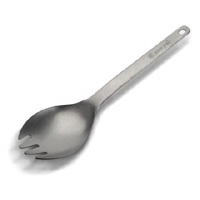
Tuesday, May 24, 2005
I May Have Hooked a Live One!.
I've been commenting over at Banana Oil! on Ian's post A Challenge, sparring with another commenter, Alex. If you're interested in the exchange, it starts here. Well, Alex has taken up the gauntlet, and I've invited him to post here at TSM. We'll see.
I love doing this.
I'm weird, aren't I?
I've been commenting over at Banana Oil! on Ian's post A Challenge, sparring with another commenter, Alex. If you're interested in the exchange, it starts here. Well, Alex has taken up the gauntlet, and I've invited him to post here at TSM. We'll see.
I love doing this.
I'm weird, aren't I?
Subscribe to:
Posts (Atom)